Search

    Language Settings
    Select Website Language

    GDPR Compliance

    We use cookies to ensure you get the best experience on our website. By continuing to use our site, you accept our use of cookies, Privacy Policy, and Terms of Service.

    Latest

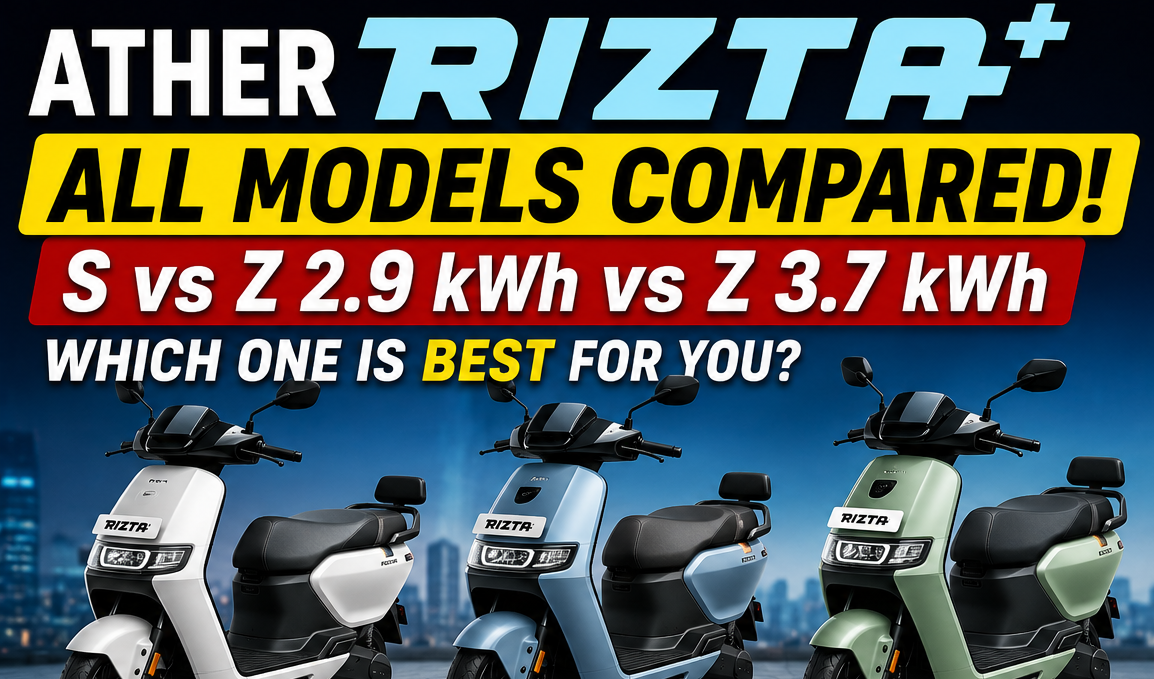
    Ather Rizta All Models Comparison 2026 – Which Ather Rizta Should You Buy?

    Ather Energy is known for making premium and technology-packed electric scooters in India. After the success of the sporty Ather 450 series, the company introduced the Ather Rizta, a completely family-focused electric scooter designed for comfort, practicality and daily convenience. The Ather Rizta is very different from traditional sporty electric scooters because it focuses on family comfort, large storage, smart safety features and smooth everyday usability. It is one of the most practical premium electric scooters currently available in India. However, many buyers are confused between the different Rizta variants, battery options and feature packages. Some people want the best value for money while others want maximum range and smart features. In this detailed 2000-word comparison blog, we will compare all Ather Rizta variants including Rizta S and Rizta Z models with different battery options. We will also explain which scooter is best for different users and which variant you should buy according to your daily usage and budget. Ather Rizta Variants Overview The Ather Rizta lineup mainly comes in two major variants: Ather Rizta S Ather Rizta Z The scooter is available with multiple battery options including: 2.9 kWh Battery 3.7 kWh Battery The Rizta Z variant is the more premium model and offers advanced smart features, touchscreen dashboard and better connectivity options. Ather Rizta All Models Quick Comparison Feature Rizta S Rizta Z 2.9 Rizta Z 3.7 Battery 2.9 kWh 2.9 kWh 3.7 kWh IDC Range 123 km 123 km 159 km Top Speed 80 km/h 80 km/h 80 km/h Display 7-inch DeepView 7-inch TFT Touchscreen 7-inch TFT Touchscreen Touchscreen No Yes Yes Navigation Basic Google Maps Google Maps Storage 34L 34L 34L Frunk Support Optional Optional Optional Crash Alert Yes Yes Yes SkidControl No Yes Yes Ather Rizta S – Best Budget Family Electric Scooter The Ather Rizta S is the entry-level variant in the Rizta lineup. Even though it is the base model, it still comes with excellent practicality, modern styling and many smart features. This variant is mainly designed for family riders who want a comfortable electric scooter with premium build quality without spending too much money. The Rizta S comes with a 2.9 kWh battery and offers 123 km IDC range which is enough for most daily city users. Main Features of Rizta S 123 km IDC range 80 km/h top speed 7-inch DeepView display Large 34L underseat storage Long comfortable seat Reverse mode AutoHold feature FallSafe technology Emergency Stop Signal Call & Music control Who Should Buy Rizta S? Budget family buyers Daily office commuters Students First-time EV buyers People shifting from petrol scooters Pros Affordable pricing Excellent comfort Large storage capacity Practical for family use Premium Ather build quality Cons No touchscreen display Limited smart features No advanced navigation experience Ather Rizta Z 2.9 kWh – Smart Family Scooter The Rizta Z 2.9 kWh variant is where the scooter starts feeling truly premium. It adds a large TFT touchscreen dashboard, Google Maps navigation and advanced connectivity features. This variant keeps the same 123 km IDC range but improves the overall ownership experience significantly through software and technology. Premium Features of Rizta Z 7-inch TFT Touchscreen Dashboard Google Maps Navigation WhatsApp Preview on Dashboard Push Navigation Alexa Integration Ride Analytics Live Location Sharing Ping My Scooter SkidControl technology Magic Twist feature Who Should Buy Rizta Z 2.9? Tech lovers Family riders wanting premium features Daily commuters Users who ride 40-70 km daily Pros Premium touchscreen experience Google Maps integration Advanced safety features Excellent smart connectivity Smooth ride quality Cons More expensive than Rizta S Range same as base model Ather Rizta Z 3.7 kWh – Maximum Range Family EV The Ather Rizta Z 3.7 kWh is the top-end model and the best Rizta variant for long-distance riders. It offers a massive 159 km IDC range while maintaining the same premium features and 80 km/h top speed. This variant is ideal for users who travel more every day and want the least charging stress. Main Features of Rizta Z 3.7 159 km IDC range 7-inch TFT Touchscreen Google Maps navigation Alexa support SkidControl Magic Twist Live location sharing Crash alert Theft alerts OTA software updates Who Should Buy Rizta Z 3.7? Long-distance commuters Heavy daily riders Premium EV buyers Users wanting maximum range Pros Best range in Rizta lineup Most premium experience Excellent smart features Advanced safety technologies Future-ready software ecosystem Cons Highest price Slightly longer charging time Comfort and Family Practicality One of the biggest strengths of the Ather Rizta is comfort. Unlike sporty scooters, the Rizta is designed mainly for family usage. It gets: Long seat Wide pillion backrest Large floorboard Easy riding posture Rear monoshock suspension The scooter feels extremely comfortable even during longer rides and rough road conditions. Ather has also focused heavily on practicality by providing 34L underseat storage and optional 22L frunk support. Combined together, the Rizta can offer up to 56L storage which is among the highest in the segment. Performance Comparison All Rizta variants use the same motor producing: 4.3 kW Peak Power 22 Nm Torque 80 km/h Top Speed Acceleration is smooth and refined rather than aggressive. The scooter feels very stable and beginner friendly. For family users, the performance is more than enough for daily city riding and occasional highway usage. Battery and Charging Comparison Battery range is one of the most important factors while buying an electric scooter. The Rizta S and Rizta Z 2.9 provide 123 km IDC range while the Rizta Z 3.7 offers 159 km IDC range. In real-world riding conditions, users can expect: 90-110 km practical range from 2.9 kWh variants 120-140 km practical range from 3.7 kWh variant Charging times: 0-80% in around 4.5 to 6.5 hours 0-100% in around 5.45 to 8.30 hours The scooter also supports Ather Grid fast charging which can recharge around 30 km range in just 10 minutes. Smart Features and Technology The Rizta Z variants clearly dominate in terms of technology. Features like Google Maps, WhatsApp preview, Alexa integration and OTA updates make the scooter feel futuristic. Safety features are also impressive: Crash alert Theft alerts Live location sharing SkidControl Emergency stop signal AutoHold These features make the Rizta one of the safest family electric scooters in India. Which Ather Rizta Should You Buy? Your Requirement Best Variant Lowest Budget Rizta S Best Value for Money Rizta Z 2.9 Maximum Range Rizta Z 3.7 Best Family Scooter Rizta Z 2.9 Long Daily Commute Rizta Z 3.7 Best Smart Features Rizta Z 3.7 Final Verdict If you want an affordable family electric scooter with excellent comfort and practicality, then the Ather Rizta S is a great option. If you want the best balance between smart features and pricing, then the Rizta Z 2.9 is the most sensible choice for most Indian buyers. And if you travel long distances daily and want the best premium experience with maximum range, then the Rizta Z 3.7 is the ultimate Rizta variant. Overall, the Ather Rizta is one of the best family electric scooters currently available in India because of its comfort, smart technology, premium quality and advanced safety features.  

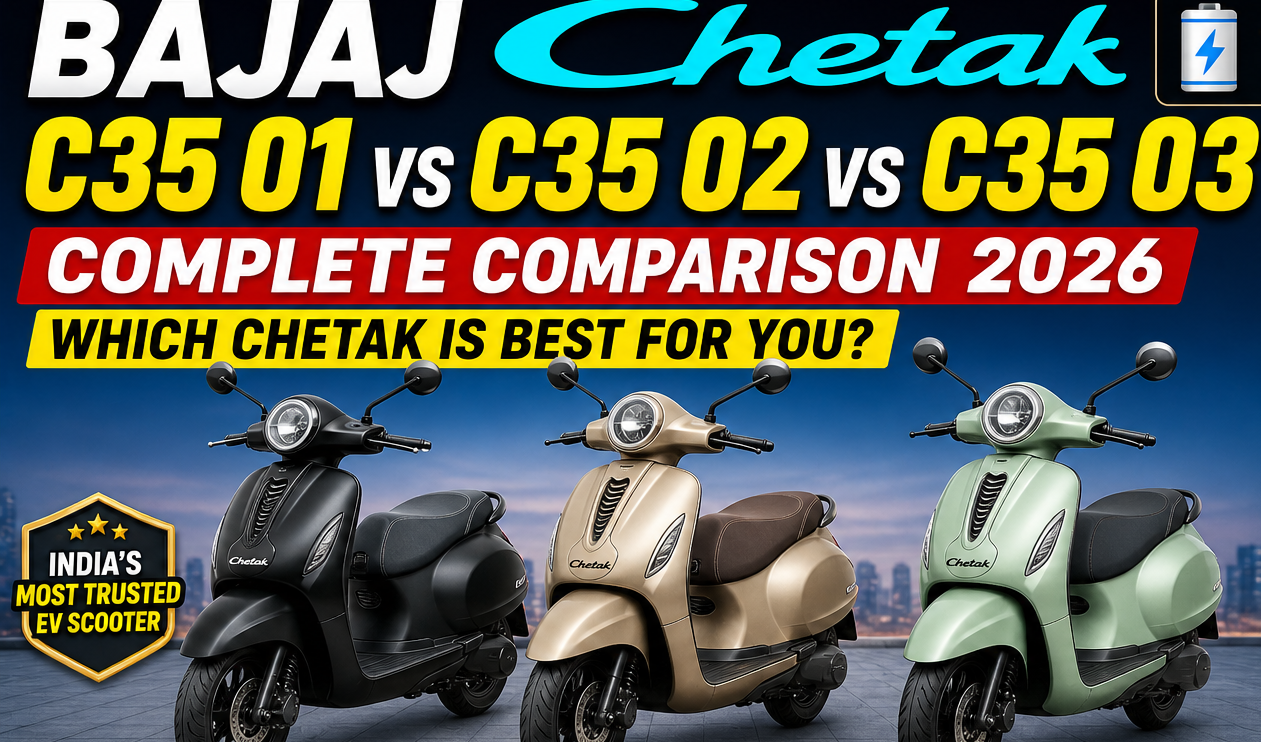
    Bajaj Chetak C35 01 vs C35 02 vs C35 03 Comparison 2026 – Which Bajaj Chetak Should You Buy?

    Bajaj Chetak has become one of India’s most trusted electric scooters because of its premium metal body, smooth riding quality, reliability and family-friendly design. In 2026, Bajaj introduced the new C35 lineup including the C35 01, C35 02 and C35 03 variants with improved range, better smart features and upgraded technology. But many buyers are confused about which Chetak model is actually worth buying. Some variants focus more on affordability while others offer premium features like TFT touchscreen display, Google Maps navigation and onboard charging. In this detailed 2000-word comparison blog, we will compare all Bajaj Chetak C35 variants including their range, top speed, charging, display, smart features, braking system and overall value for money. We will also explain which scooter is best for different types of riders. Bajaj Chetak C35 Variants Overview The “35” in the Chetak lineup represents the 3.5 kWh battery platform. All three models use a 3.5 kWh battery but differ in features, charging system, display and riding experience. The three variants are: Chetak C35 01 Chetak C35 02 Chetak C35 03 Bajaj Chetak C35 01 vs C35 02 vs C35 03 Quick Comparison Feature C35 01 C35 02 C35 03 Battery 3.5 kWh 3.5 kWh 3.5 kWh Range 153 km 153 km 151 km Top Speed 80 km/h 80 km/h 70 km/h Charging Type On Board 950W Off Board 750W Off Board 750W Charging Time 3 Hours 3 Hr 25 Min 3 Hr 25 Min Display 5-inch TFT Touch 5-inch TFT Colour LCD Front Brake Disc Disc Drum Hill Hold Yes Yes Yes OTA Updates Yes Yes No Navigation Google Maps TBT Navigation Not Available Helmet Space 35L 35L 35L Bajaj Chetak C35 01 – The Most Premium Chetak The Bajaj Chetak C35 01 is the top-end and most premium scooter in the entire lineup. It is designed for buyers who want the best features, maximum convenience and a modern connected riding experience. This model offers a 153 km range and 80 km/h top speed, making it suitable for both city commuting and longer rides. One of the biggest advantages of the C35 01 is its onboard charger which supports faster and more convenient charging. Premium Features of C35 01 5-inch TFT Touchscreen Display Google Maps Navigation Onboard 950W Charger Disc Front Brake Hill Hold Assist OTA Software Updates Call Accept/Reject Feature Auto Hazard Lights Sequential Blinkers Guide Me Home Lights Who Should Buy C35 01? Premium buyers Tech lovers Long-distance commuters People wanting advanced smart features Users upgrading from petrol scooters Pros Most premium design and features Best display in the lineup Google Maps support Fast charging support Excellent riding comfort Premium metal body quality Cons Most expensive variant Some features require datapack subscription Bajaj Chetak C35 02 – Best Value for Money Variant The Bajaj Chetak C35 02 is the sweet spot in the lineup because it balances price and features very well. It gives almost all important premium features while keeping the price lower than the C35 01. It also gets a 153 km range and 80 km/h top speed which is impressive for daily commuting. Unlike the top model, it uses an off-board charger but still offers practical charging times. Main Features of C35 02 5-inch TFT Display TBT Navigation Disc Front Brake Hill Hold Assist OTA Updates Eco and Sport Ride Modes 35L Helmet Space Steel Body Construction Who Should Buy C35 02? Family riders Office commuters Users wanting premium features at lower price Daily city riders Pros Best value for money Excellent riding quality Premium TFT display Good range and performance Reliable metal body Cons No touchscreen display No Google Maps support Slower charging than C35 01 Bajaj Chetak C35 03 – Budget Family Electric Scooter The Bajaj Chetak C35 03 is the most affordable variant in the lineup. Bajaj has reduced some premium features to make it more budget friendly. Even though it is the entry-level model, it still provides excellent range, solid build quality and comfortable riding experience. The C35 03 offers 151 km range which is still very good for daily commuting. However, the top speed is reduced to 70 km/h and it misses some advanced connectivity features. Main Features of C35 03 Colour LCD Display 151 km Range 70 km/h Top Speed Hill Hold Assist Steel Body Eco and Sport Modes 35L Storage Who Should Buy C35 03? Budget buyers Students City commuters People shifting from petrol scooters Pros Affordable pricing Excellent battery range Strong metal body Comfortable ride quality Good practical scooter Cons Basic display No OTA updates Drum brake setup Lower top speed Design and Build Quality Comparison One of the biggest reasons why people love Bajaj Chetak is its solid metal body. Unlike many plastic electric scooters, the Chetak feels premium and durable. All three models use the same steel body construction with IP67-rated water resistance. This makes them suitable for Indian road conditions and rainy seasons. The retro-modern styling also gives the scooter a premium road presence. Compared to sporty EV scooters, the Chetak focuses more on elegance and comfort. Performance Comparison In terms of performance, the C35 01 and C35 02 are almost identical because both offer 80 km/h top speed and similar acceleration. The C35 03 is slightly slower with 70 km/h top speed, making it better suited for relaxed city commuting rather than aggressive riding. For most family riders, all three scooters provide enough performance for daily city usage. Battery and Range Comparison Range is one of the most important factors when buying an electric scooter. Thankfully, all three Chetak variants offer excellent battery backup. The C35 01 and C35 02 offer 153 km claimed range while the C35 03 delivers 151 km. In real-world conditions, riders can expect around: 120–135 km practical range in Eco mode 100–115 km practical range in mixed riding This makes the Chetak suitable even for heavy daily usage. Smart Features Comparison The C35 01 clearly leads in smart technology because it gets Google Maps navigation, touchscreen display and advanced connectivity features. The C35 02 also offers smart features but uses turn-by-turn navigation instead of full Google Maps integration. The C35 03 is more basic and focuses mainly on practicality rather than technology. Which Bajaj Chetak is Best for You? Your Requirement Best Variant Lowest Budget C35 03 Best Value for Money C35 02 Maximum Features C35 01 Daily Office Commute C35 02 Premium Experience C35 01 Family Usage C35 02 Final Verdict If your budget is limited and you mainly want a practical family electric scooter, then the Bajaj Chetak C35 03 is a good option. If you want the best balance of price, range and premium features, then the C35 02 is the smartest choice for most Indian buyers. And if you want the most premium electric scooter experience with touchscreen display, Google Maps and fast onboard charging, then the C35 01 is the ultimate Chetak model. Overall, Bajaj Chetak remains one of the best family electric scooters in India because of its premium build quality, smooth ride comfort, practical range and trusted Bajaj reliability.

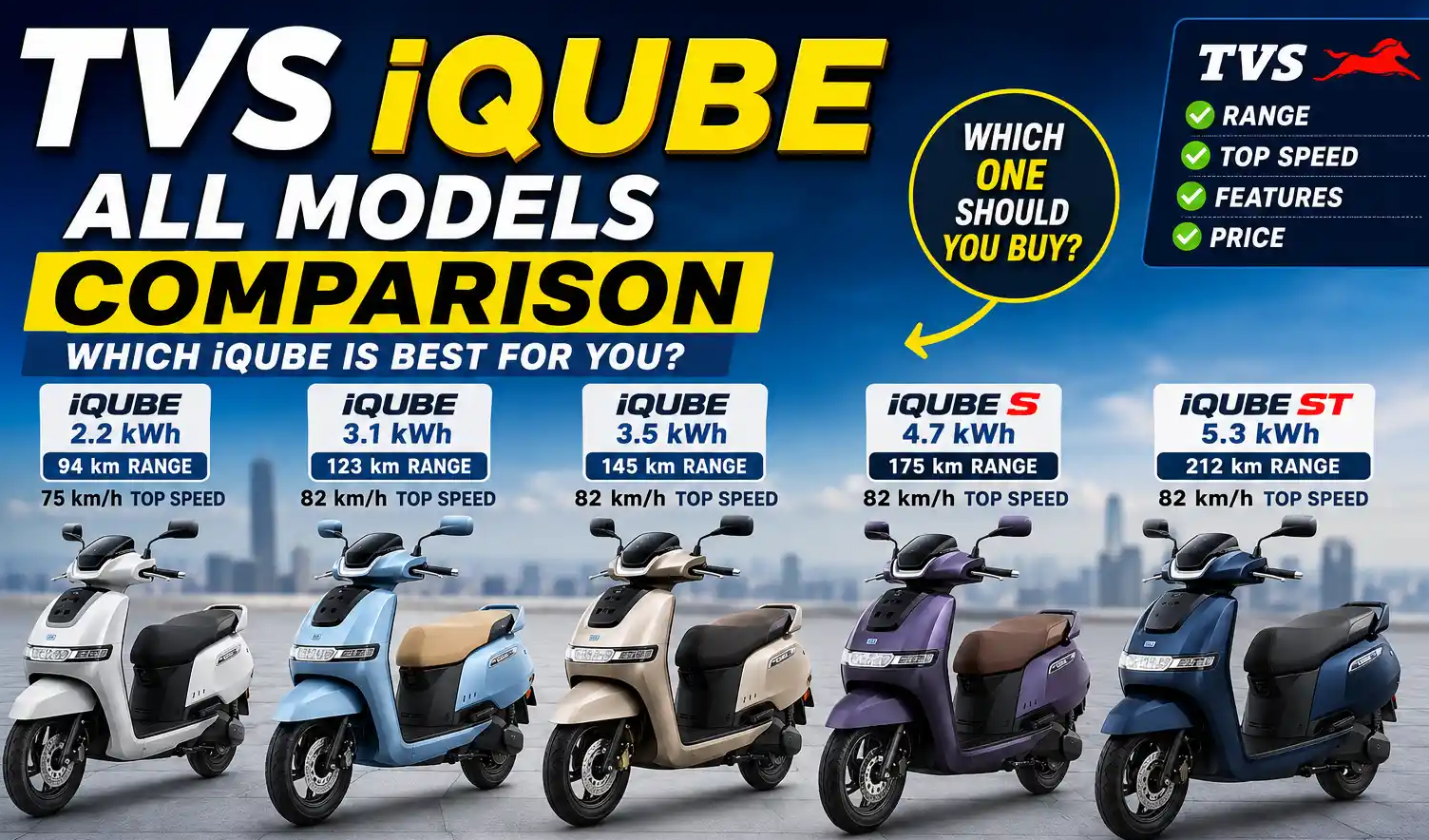
    TVS iQube All Models Comparison 2026 – Which TVS iQube Should You Buy?

    TVS iQube has become one of India’s most popular family electric scooters because of its comfort, reliability, smooth riding experience and practical features. TVS now offers multiple variants including the iQube 2.2 kWh, 3.1 kWh, 3.5 kWh, iQube S 4.7 kWh and the top-end iQube ST 5.3 kWh. But many buyers get confused about which model is actually worth buying. In this detailed comparison blog, we will compare every TVS iQube model and also tell you which scooter is best according to your daily usage and budget. TVS iQube All Variants Quick Comparison Model Battery IDC Range Top Speed Display Boot Space iQube 2.2 2.2 kWh 94 km 75 km/h TFT Display 30L iQube 3.1 3.1 kWh 123 km 82 km/h TFT Display 32L iQube 3.5 3.5 kWh 145 km 82 km/h TFT Display 32L iQube S 4.7 4.7 kWh 175 km 82 km/h Large TFT Display 32L iQube ST 5.3 5.3 kWh 212 km 82 km/h TFT Touch Display 32L TVS iQube 2.2 kWh – Best Budget Family EV The TVS iQube 2.2 kWh is the most affordable model in the lineup. It offers 94 km IDC range and 75 km/h top speed which is enough for daily city rides. Best For: Office commuters College students Daily city riding People upgrading from petrol scooters Pros Affordable price Smooth and comfortable ride Portable charger included Good for short city rides Cons Lower range compared to other variants No premium touch display Not ideal for long-distance riders TVS iQube 3.1 kWh – Balanced Performance Model The iQube 3.1 kWh is one of the most balanced variants because it gives better range and higher top speed without becoming too expensive. It offers 123 km IDC range and 82 km/h speed. Best For: Daily office users Family riders People riding 40-70 km daily Why Should You Buy It? This model gives the perfect balance between price, range and features. For most Indian buyers, this is the sweet spot in the iQube lineup. TVS iQube 3.5 kWh – Long Range Daily Commuter The iQube 3.5 kWh variant increases the range to 145 km while maintaining the same 82 km/h top speed. It is ideal for riders who travel more every day. Best For: Heavy daily commuters Delivery riders People needing better battery backup Main Advantages Excellent range Practical for long city rides Same comfortable iQube design Good value for money TVS iQube S 4.7 kWh – Premium Family Electric Scooter The iQube S 4.7 kWh is a premium family scooter with 175 km IDC range and additional premium features. It also gets adjustable rear suspension and a larger TFT display. Best For: Premium buyers Long-distance city riders People wanting advanced features Top Features 175 km IDC range Large TFT display Hill Hold feature Bluetooth connectivity Music control Navigation support TPMS support TVS iQube ST 5.3 kWh – Ultimate Long Range EV Scooter The TVS iQube ST 5.3 kWh is the flagship and most advanced model in the lineup. It offers a massive 212 km IDC range and premium smart features. Best For: Long-distance riders Tech lovers Premium EV buyers People wanting maximum range Premium Features 212 km IDC range TFT Touch Display Voice Assist Navigation Smart connectivity Advanced ride features Premium design and comfort Which TVS iQube Should You Buy? Your Usage Recommended Model Lowest Budget iQube 2.2 kWh Best Value for Money iQube 3.1 kWh Long Daily Commute iQube 3.5 kWh Premium Features + Good Range iQube S 4.7 kWh Maximum Range & Top Features iQube ST 5.3 kWh Final Verdict If your daily running is low and you want an affordable electric scooter, the iQube 2.2 kWh is enough. If you want the best overall package, then the iQube 3.1 kWh is the most practical choice for Indian users. If you travel long distances daily, the iQube 3.5 kWh and iQube S 4.7 kWh are excellent options. And if budget is not an issue and you want the most premium TVS electric scooter with the highest range, then the iQube ST 5.3 kWh is the best choice.

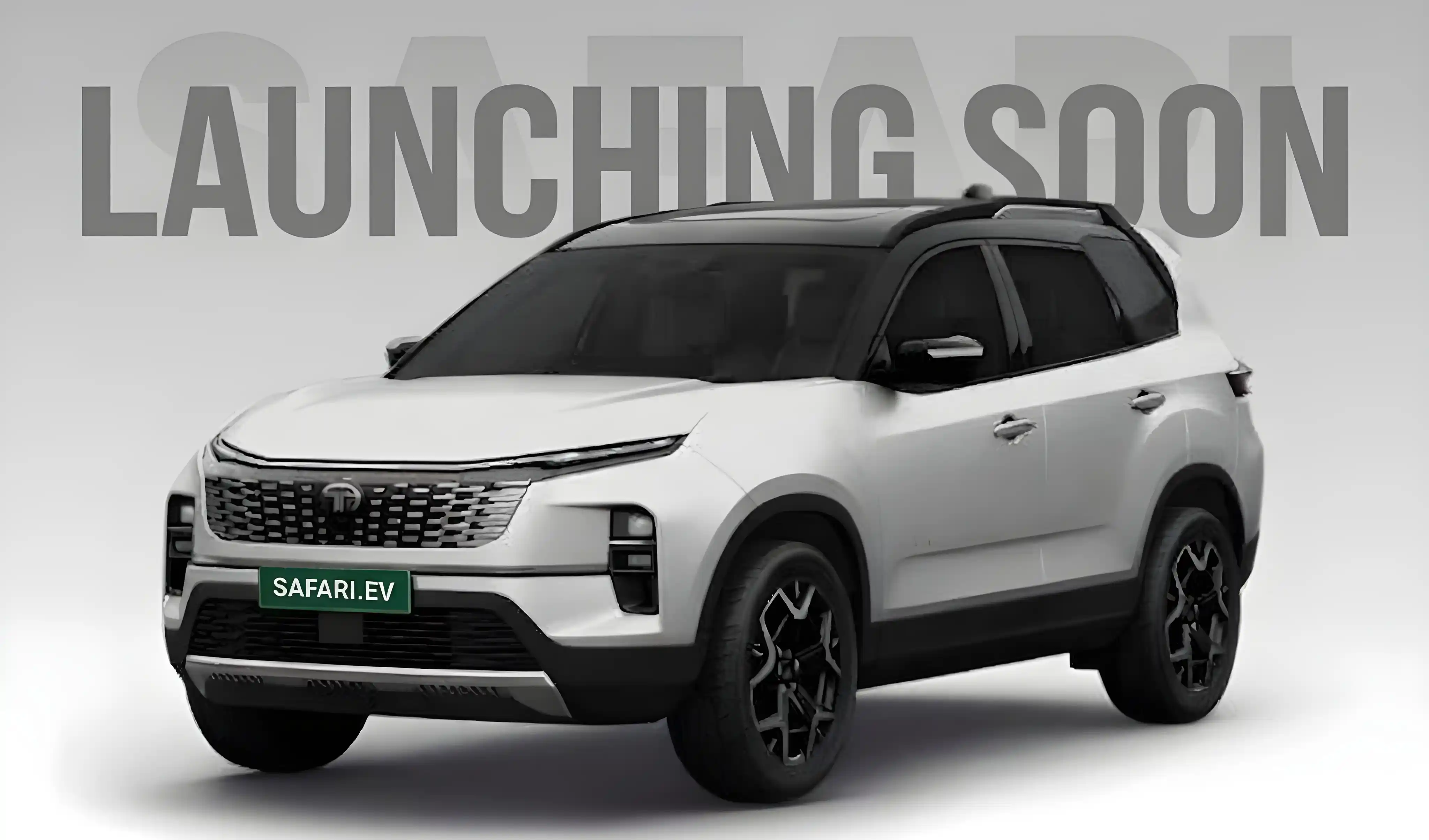
    Tata Safari EV 2026: Launch Date, Expected Price, Specifications, Features & Complete Details

    The Indian electric vehicle (EV) market is expanding at a rapid pace, and Tata Motors is at the forefront of this revolution. After achieving massive success with models like Nexon EV, Tiago EV, and Punch EV, Tata is now preparing to enter the premium electric SUV segment with the much-awaited Tata Safari EV. The Safari name already holds strong brand value in India, known for its bold design, spacious cabin, and premium feel. With electrification, Tata aims to combine luxury, performance, and sustainability in one powerful package. Tata Safari EV Launch Date in India As of now, Tata Motors has not officially confirmed the exact launch date of the Safari EV. However, based on industry trends and Tata’s EV roadmap, the SUV is expected to debut in mid-2026. Expected Reveal: Early 2026 Auto Events Expected Launch: May – August 2026 Possible Delay: Late 2026 (depending on production readiness) The vehicle is likely to be showcased in near-production form before the official launch. Tata Safari EV Expected Price in India The Tata Safari EV will be positioned as a premium electric SUV, and its pricing will reflect its size, features, and technology. Expected Starting Price: ₹25 Lakh Top Variant Price: ₹32–35 Lakh (Ex-showroom) This pricing strategy will help Tata compete directly with upcoming premium EVs while maintaining value-for-money positioning. Battery, Range & Performance Battery Pack The Safari EV is expected to feature a large battery pack, likely in the range of 60–70 kWh. This will ensure strong performance along with long driving range. Driving Range Claimed Range: 450–500 km (Full charge) Real-world Range: 380–450 km (estimated) Performance Instant torque delivery for quick acceleration Smooth and silent driving experience Expected 0–100 km/h in under 9 seconds Possible Dual Motor AWD (All-Wheel Drive) option This makes the Safari EV suitable for both city commutes and highway touring. Platform & Architecture The Tata Safari EV is expected to be based on Tata’s advanced Gen 2 / Acti.ev platform, which is specifically designed for electric vehicles. Key Benefits of the Platform: Improved battery efficiency Better structural rigidity Enhanced safety standards Optimized weight distribution Support for AWD configurations This platform will also support fast charging and future EV upgrades. Charging Capabilities Fast Charging: 10% to 80% in ~40–50 minutes Home Charging: 6–8 hours (AC charger) DC Fast Charging Support: Yes Vehicle-to-Load (V2L): Expected Fast charging support will make long-distance travel more convenient. Interior, Features & Technology The Safari EV is expected to offer a highly premium and feature-rich interior, taking inspiration from the updated Safari ICE model. Infotainment & Digital Features 12.3-inch touchscreen infotainment system 10.25-inch digital instrument cluster Wireless Android Auto & Apple CarPlay Connected car technology (app-based controls) Voice assistant with AI integration Comfort & Convenience Ventilated front and rear seats Dual-zone climate control Panoramic sunroof Wireless phone charging Powered driver and co-driver seats Premium leather upholstery Space & Seating 6-seater (Captain seats) and 7-seater options Spacious third row Large boot space Safety Features Tata Motors is known for its safety standards, and the Safari EV is expected to be one of the safest electric SUVs in its segment. 6–7 airbags 360-degree camera Electronic Stability Control (ESC) ABS with EBD Blind spot monitoring Tyre Pressure Monitoring System (TPMS) ADAS Features (Expected) Adaptive Cruise Control Lane Keep Assist Forward Collision Warning Automatic Emergency Braking Exterior Design The Tata Safari EV will carry a bold and futuristic design while maintaining the iconic Safari DNA. Closed EV grille design Full LED lighting setup Connected LED DRLs and tail lamps Aerodynamic alloy wheels Blue accents (EV identity) The overall look will be premium, muscular, and futuristic. Expected Competitors The Tata Safari EV will compete in the growing premium electric SUV segment in India. Mahindra XEV 9e Mahindra BE 6 Hyundai Creta Electric BYD Atto 3 This segment is expected to grow significantly by 2026, making competition intense. Quick Specifications Overview Category Details Launch Mid 2026 (Expected) Price ₹25 – ₹35 Lakh Battery 60–70 kWh (Expected) Range 450–500 km Seating 6 / 7 Seater Drive Type FWD / AWD (Expected) Final Verdict The Tata Safari EV has the potential to redefine the premium electric SUV segment in India. It combines space, performance, safety, and advanced technology in a single package. If Tata Motors manages to deliver competitive pricing along with strong real-world range and features, the Safari EV could become one of the top-selling premium EV SUVs in India. Should You Wait for Tata Safari EV? YES, if you want: A premium 7-seater electric SUV Long driving range (~500 km) Latest technology and safety features Future-ready EV platform Consider alternatives if: You need an EV immediately Your budget is under ₹25 lakh

    0 312 0

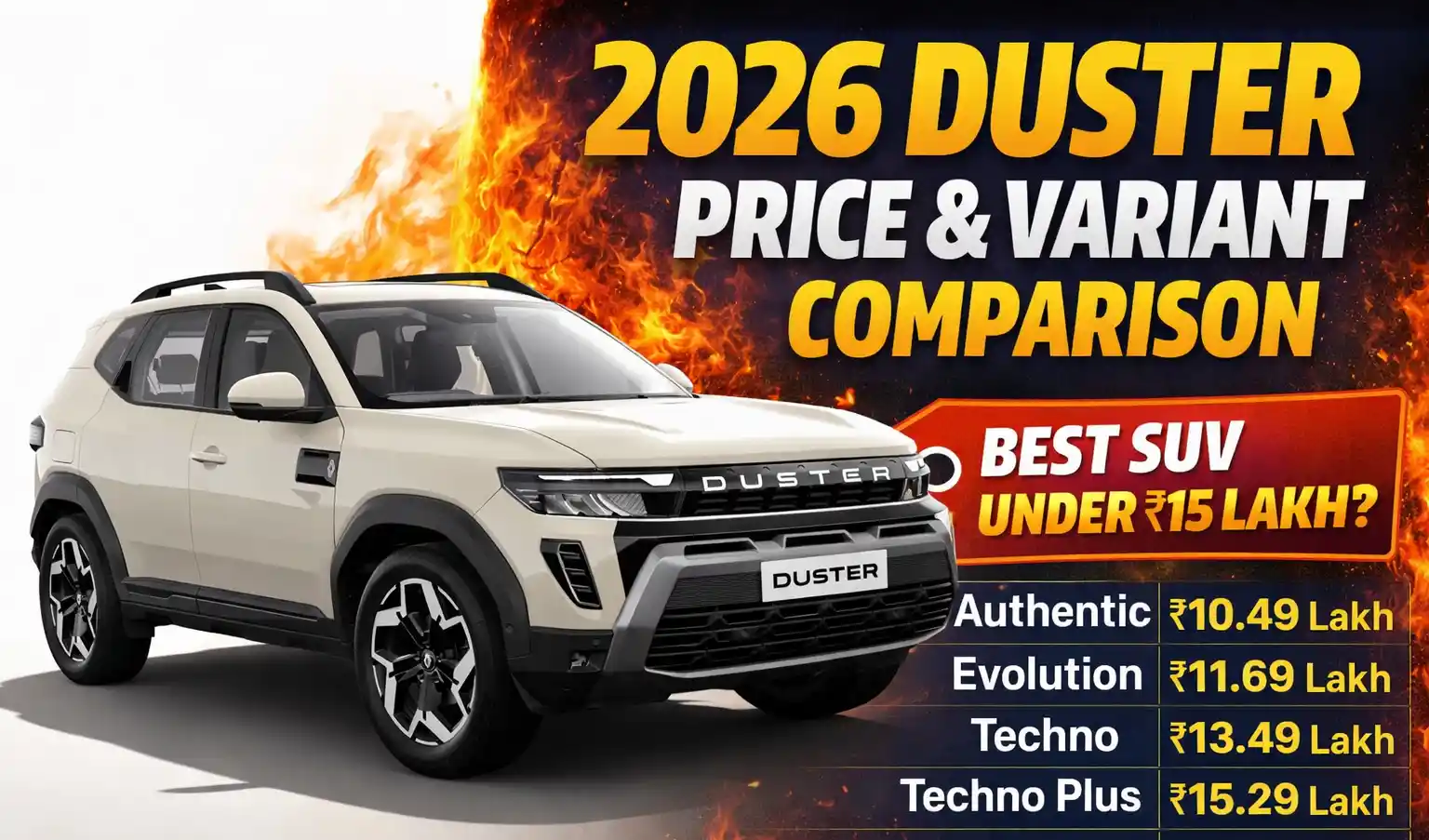
    2026 Renault Duster Variants Explained in Detail-Complete Buying Guide

    Choosing the right variant of the Renault Duster 2026 can be confusing because each variant is designed for a different type of buyer. Renault has smartly structured the lineup — from a budget-friendly base model to a fully loaded premium SUV. In this section, we will go deep into each variant — not just features, but also real-world usability, what you gain, what you miss, and whether it is worth your money. 1. Authentic Variant – Entry-Level SUV Experience Price: ₹10.49 Lakh (1.0L Turbo MT) What You Get: Eco LED headlamps with DRLs LED tail lamps 7-inch digital driver display All power windows Basic safety setup 17-inch steel wheels Real-World Experience: This variant gives you the core Duster DNA — strong build, high ground clearance, and SUV stance. But it is very basic in terms of features. There is no touchscreen, no connected tech, and no premium feel inside. What You Miss: No touchscreen infotainment No rear camera No cruise control No alloy wheels Who Should Buy? Budget buyersRural or rough usage usersPeople who want a simple SUV without electronics Who Should Avoid? Urban buyers expecting modern featuresTech lovers Verdict: Only buy if budget is tight. Otherwise, upgrade is worth it. 2. Evolution Variant – Practical & Smart Upgrade Price: ₹11.69 – ₹14.49 Lakh What You Get: 10.1-inch touchscreen infotainment system Rear view camera with dynamic guidelines Cruise control Alloy wheels LED rear light bar Real-World Experience: This is where the Duster starts feeling like a modern SUV. You get essential features that are actually useful in daily driving — especially the touchscreen and rear camera. Why This Variant Matters: For most Indian buyers, this variant offers a good balance. It covers the basics without pushing the price too high. What You Still Miss: No sunroof No connected car tech No premium interior feel Who Should Buy? Family buyersDaily city usersBudget-conscious users wanting modern features Verdict: Smart upgrade over base, but not the best value overall. 3. Techno Variant – The Sweet Spot ⭐ Price: ₹13.49 – ₹15.89 Lakh What You Get: Panoramic sunroof Full LED headlamps Powered tailgate Connected car technology Premium interior materials Real-World Experience: This variant completely transforms the Duster into a premium SUV. Features like sunroof and connected tech are not just for show — they improve everyday usability and experience. Why This is Best Value: Big jump in features Justified price increase Feels like a higher segment car Feature vs Price Balance: Compared to Evolution, the extra money you pay here gives you a much more premium feel. This is where the Duster actually competes with Creta/Seltos. Who Should Buy? Most buyersPeople upgrading from hatchback/sedanBuyers who want value + premium features Verdict: Best Variant to Buy 4. Techno Plus Variant – Tech-Focused Upgrade Price: ₹15.29 – ₹16.69 Lakh What You Get (Over Techno): 10.25-inch digital instrument cluster Blind spot warning Hill descent control Front & side parking sensors 18-inch diamond-cut alloy wheels Real-World Experience: This variant focuses more on technology and safety. The driving experience becomes more confident, especially on highways and in tight parking situations. Key Advantage: You get features usually seen in more expensive SUVs — especially blind spot monitoring and advanced parking assist. Is It Worth the Upgrade? If you already stretched your budget for Techno, then upgrading further depends on how much you value safety tech and digital features. Who Should Buy? Tech enthusiastsHighway driversSafety-focused buyers Verdict: Premium but slightly expensive for what it adds 5. Iconic Variant – Full Luxury Experience Price: ₹16.99 – ₹18.49 Lakh What You Get (Top Features): Ventilated front seats Electric adjustable seats Google built-in infotainment system 17 ADAS safety features 360-degree camera Premium leatherette interior Real-World Experience: This variant gives you a luxury SUV feel. Everything feels advanced — from seat comfort to safety systems. Highlight Feature – ADAS: Adaptive cruise control Lane keep assist Emergency braking These features make long drives safer and more relaxing. Is It Worth It? Yes — but only if your budget allows. Otherwise, Techno already covers most needs. Who Should Buy? Premium buyersLong-distance driversPeople upgrading from higher segment cars Verdict: Best for luxury, not for value Final Variant Comparison (Quick Summary) Variant Best For Verdict Authentic Budget Basic only Evolution Family Practical Techno Everyone ⭐ Best Value Techno Plus Tech Users Premium Tech Iconic Luxury Top-End Final Buying Advice If you want a simple answer: Best Overall: Techno Variant Budget Option: Evolution Luxury Option: Iconic The Techno variant is where the Duster truly shines — offering the perfect balance of price, features, and real-world usability. Renault Duster 2026 Competitors – And Why Duster Stands Out The 2026 Renault Duster enters one of the most competitive segments in India — the mid-size SUV category. It directly competes with some of the most popular SUVs in the market. Key Competitors of Renault Duster 2026: Hyundai Creta Kia Seltos Maruti Grand Vitara Toyota Hyryder Skoda Kushaq Volkswagen Taigun Duster vs Competitors – Detailed Comparison Duster vs Hyundai Creta The Hyundai Creta is known for its premium interior and feature-loaded cabin. However, the Duster focuses more on rugged performance and durability. Duster Advantage: Better build quality, stronger suspension, off-road capability Creta Advantage: More features, refined interior Verdict: If you want comfort → Creta | If you want toughness → Duster Duster vs Kia Seltos The Kia Seltos is a tech-heavy SUV with a modern design. But the Duster offers a more practical and durable driving experience. Duster Advantage: Better for rough roads, higher ground clearance Seltos Advantage: Better infotainment and features Verdict: City usage → Seltos | Mixed/rough usage → Duster Duster vs Grand Vitara / Hyryder The Maruti Grand Vitara and Toyota Hyryder focus on fuel efficiency with hybrid technology. Duster Advantage: More powerful turbo engines, better driving performance Vitara/Hyryder Advantage: Excellent mileage Verdict: Mileage → Vitara/Hyryder | Performance → Duster Duster vs Skoda Kushaq / Volkswagen Taigun The Skoda Kushaq and Volkswagen Taigun are known for their German engineering and driving dynamics. Duster Advantage: Better for bad roads, stronger suspension setup Kushaq/Taigun Advantage: Better handling and driving feel on highways Verdict: Enthusiast driving → Kushaq/Taigun | All-road usability → Duster Why Renault Duster 2026 is Better Than Its Rivals 1. Built for Indian Roads Unlike many soft-roaders, the Duster is designed to handle bad roads, potholes, and rural conditions easily. 2. Strong Suspension Setup The Duster has always been known for its suspension. It absorbs bumps better than most competitors. 3. True SUV Character While competitors focus more on city comfort, the Duster maintains a true SUV feel with better ground clearance and stability. 4. Turbo Engine Performance The turbo petrol engines provide strong acceleration and power, making highway driving effortless. 5. Balanced Pricing Compared to rivals, the Duster offers a good balance of features and price, especially in the Techno variant. Where Competitors Still Win More premium interiors (Creta, Seltos) Better mileage (Hybrid SUVs) More advanced infotainment UI

    0 586 0

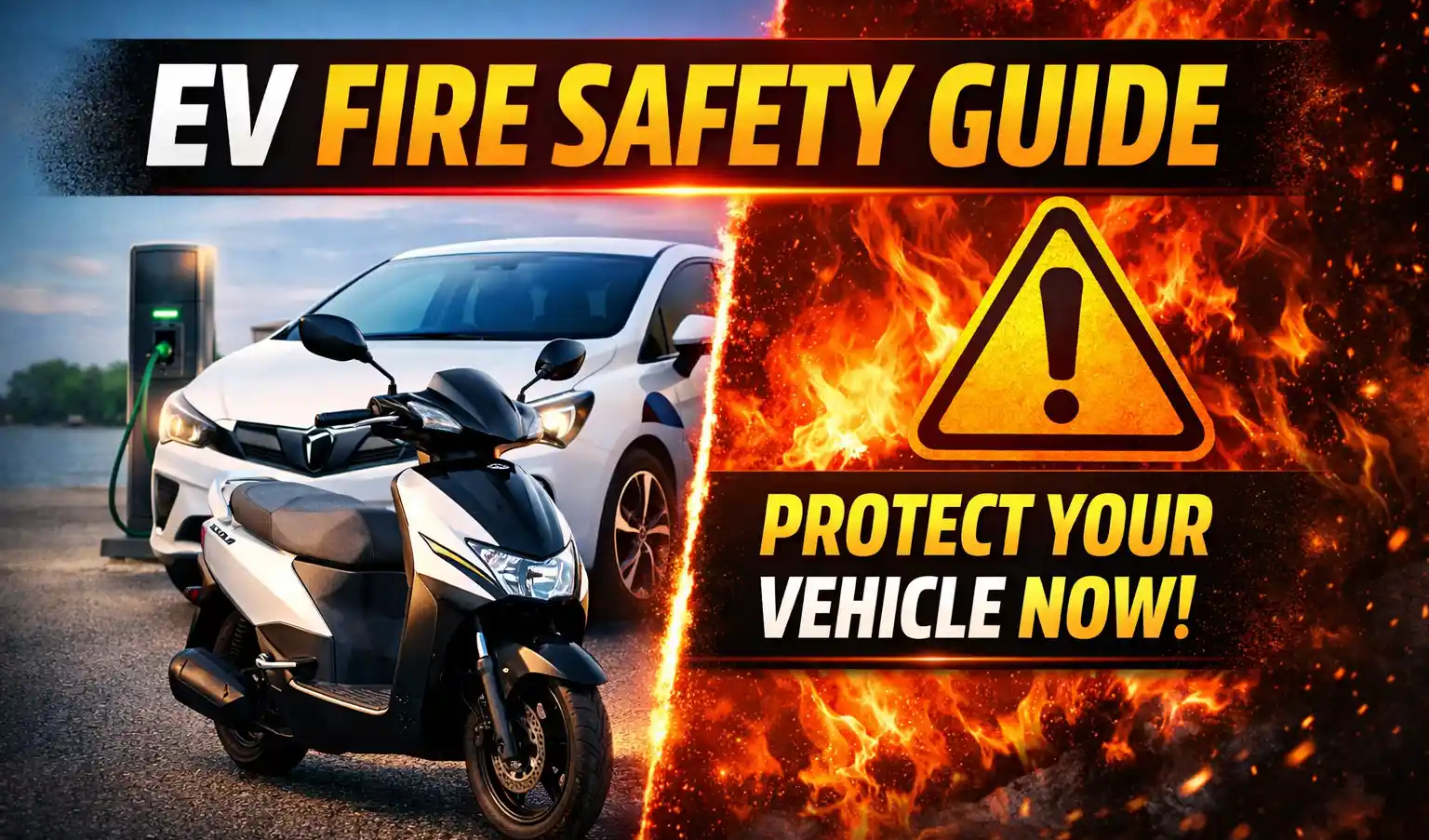
    Electric Vehicle Fire Safety Guide - How to Prevent EV Fires & Protect Your Investment

    The shift towards Electric Vehicles (EVs) in India is no longer a trend — it’s a revolution. From daily commuters using electric scooters to families investing in electric cars, the country is rapidly embracing clean mobility. However, along with innovation comes responsibility. Recently, a concerning fire incident in Indore. brought EV safety into the spotlight. While such incidents are rare, they highlight the importance of awareness, correct usage, and preventive care. This detailed guide will walk you through everything you need to know about EV fire safety — from understanding the root causes to practical steps that can keep you and your vehicle safe. The Indore EV Fire Incident – A Wake-Up Call The recent EV fire case in Indore shocked many users. A parked electric vehicle reportedly caught fire, raising concerns about battery safety and charging practices. While official investigations may point to specific technical reasons, such incidents usually involve: Battery overheating due to thermal imbalance Faulty or non-certified charging equipment Improper storage or extreme heat exposure Possible manufacturing or maintenance issues This incident is not a reason to fear EVs — instead, it’s a reminder that technology must be handled responsibly. 🔬 Understanding EV Batteries: Where the Real Risk Lies Every electric vehicle runs on a lithium-ion battery pack, which acts as the heart of the entire system. These batteries are known for delivering high energy efficiency, quick charging capability, and long-term usability — which is why they are used not only in EVs but also in devices like smartphones and laptops. However, despite their advantages, lithium-ion batteries require careful handling because they are sensitive to certain conditions that can impact their safety. How Lithium-Ion Batteries Function Lithium-ion batteries work by transferring lithium ions between two electrodes — the positive (cathode) and negative (anode) — during charging and discharging cycles. This movement generates and stores energy efficiently. While this technology is highly advanced, it can become unstable if exposed to unfavorable conditions such as: Excessive heat: High temperatures can disturb the internal balance of the battery Overcharging: Charging beyond recommended limits can stress battery cells Physical impact: Accidents or drops may damage internal components Electrical faults: Internal or external short circuits can trigger failures What is Thermal Runaway? Thermal runaway is one of the most critical risks associated with lithium-ion batteries. It is a condition where the battery enters an uncontrollable heating cycle. The battery temperature begins to rise rapidly This heat triggers further internal reactions A chain reaction is created, increasing heat continuously In extreme cases, it can result in fire or even an explosion To minimize such risks, modern electric vehicles are equipped with a Battery Management System (BMS). This system constantly monitors temperature, voltage, and charging patterns to keep the battery operating within safe limits. In simple terms, while EV batteries are highly reliable, their safety depends on proper management, usage, and built-in protection systems. Common Causes of EV Fires 1. Overcharging the Battery Leaving your EV plugged in for too long can stress the battery, especially if safety systems fail or low-quality chargers are used. 2. Using Duplicate Chargers Local or uncertified chargers are one of the biggest risks. They can cause voltage fluctuations and overheating. 3. High Ambient Temperature India’s climate can be harsh. Parking your EV under direct sunlight for long hours increases battery temperature significantly. 4. Physical Damage Even a minor accident can damage the battery pack internally, leading to delayed fire risk. 5. Water Damage Flooded roads or deep water exposure can compromise battery integrity, even if the vehicle appears fine initially. 6. Poor Quality EV Brands Some low-cost EV manufacturers cut corners in battery quality and safety systems, increasing risk. Essential EV Safety Tips to Prevent Fire Incidents 1. Always Use Manufacturer-Approved Charger Never compromise here. Certified chargers are designed specifically for your vehicle’s battery. 2. Avoid Overnight Charging (Regularly) Occasional overnight charging is fine, but making it a habit can degrade battery health over time. 3. Install a Dedicated Charging Point Avoid extension cords or unstable connections. Use proper wiring with earthing. 4. Charge in Ventilated Areas Heat buildup during charging is normal. Ventilation helps prevent overheating. 5. Keep Away from Flammable Materials Never charge near petrol cans, wooden furniture, or cloth materials. 6. Monitor Battery Temperature If your EV app shows battery temperature, keep an eye on it during charging. 7. Avoid Fast Charging Frequently Fast charging generates more heat. Use it only when necessary. 8. Don’t Charge Immediately After a Ride Let the battery cool down before plugging in. 9. Regular Servicing is Must Authorized service checks can detect early issues. 10. Avoid Local Modifications Never alter wiring or battery systems. 11. Update Software Regularly Modern EVs rely on software for safety. Keep it updated. 12. Park in Shade Reduce heat exposure by avoiding direct sunlight parking. 13. Be Careful After Accidents Get your battery inspected even if damage looks minor. 14. Avoid Water Logging Areas Don’t take your EV through deep flooded roads. 15. Choose Trusted Brands Only Safety starts with the right product choice. Electric Cars vs Electric Scooters – Safety Comparison Not all EVs are equally safe. Let’s understand: Electric Cars Advanced Battery Management Systems Better cooling systems Stronger build quality Electric Scooters Compact battery packs Higher exposure to heat Often budget-focused manufacturing This doesn’t mean scooters are unsafe — but they require extra attention. What To Do If Your EV Catches Fire? In case of an emergency: Move away immediately Do not panic Avoid using water directly Use appropriate fire extinguisher if trained Call emergency services EV fires are intense and difficult to control — personal safety is the priority. Charging at Home vs Public Charging – Which is Safer? Home Charging Safer if wiring is proper Better control Lower risk Public Charging Fast but higher stress on battery Depends on station quality Useful for long trips Best practice: Use home charging for daily needs. Future of EV Safety in India The Indian EV ecosystem is evolving rapidly. Safety improvements include: Advanced battery cooling technologies AI-based battery monitoring Stricter government regulations Improved charging infrastructure Manufacturers are investing heavily to ensure EVs become even safer than traditional vehicles. Final Thoughts Electric vehicles are not dangerous — lack of awareness is. The Indore incident reminds us that even advanced technology needs responsible handling. By following proper safety practices, you can enjoy EV ownership without fear. EVs are the future of India — clean, efficient, and smart. Just make sure your approach is equally smart. Frequently Asked Questions (FAQs) Q1. Are EV fires common in India? No, they are rare compared to petrol vehicle fires. Q2. Can EV batteries explode? In extreme cases involving thermal runaway, yes — but modern safety systems reduce this risk significantly. Q3. Is fast charging dangerous? Not dangerous, but frequent use can increase battery stress. Q4. Should I worry about EV safety? No — just follow proper guidelines and stay informed. Q5. Which EV is safest? Vehicles from trusted brands with certified batteries and strong safety features.

    0 436 0

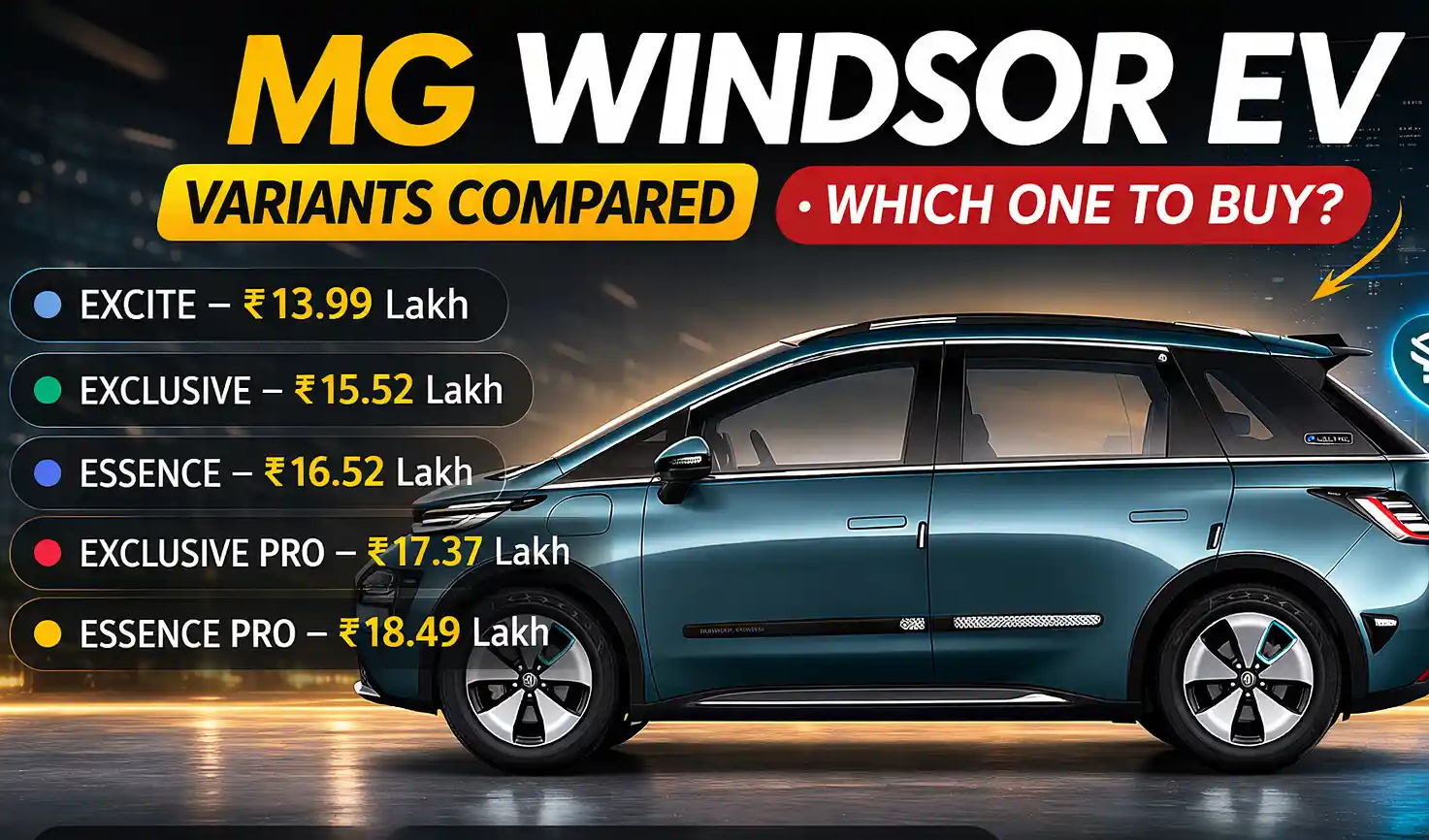
    MG Windsor EV Variants Explained: Excite vs Exclusive vs Essence vs Pro – Which One Should You Buy?

    The electric vehicle market in India is growing rapidly, and automakers are introducing new models that combine technology, comfort, and sustainability. One such premium electric vehicle is the MG Windsor EV. Designed to offer a luxurious and tech-rich driving experience, this EV comes with multiple variants so buyers can choose according to their budget and requirements. The MG Windsor EV is available in several variants including Excite, Exclusive, Essence, Essence Pro, and Exclusive Pro. Each variant offers a different combination of features, technology, and pricing. In this detailed guide, we will compare all variants of the MG Windsor EV and help you understand which variant is the best option for you. MG Windsor EV Price in India (Variant-wise) Variant Ex-Showroom Price (India) Excite ₹13,99,800 Exclusive ₹15,52,900 Essence ₹16,52,900 Exclusive Pro ₹17,37,900 Essence Pro ₹18,49,900 The pricing positions the Windsor EV as a premium electric MPV/SUV-style vehicle with advanced technology and luxury features. Battery, Motor and Range The MG Windsor EV comes with two battery options depending on the variant. These batteries power a permanent magnet synchronous electric motor that produces strong torque and smooth acceleration. Battery Options: 38 kWh and 52.9 kWh Maximum Power: 136 PS Maximum Torque: 200 Nm Maximum Range: Up to 449 km on a single charge Fast Charging: 20% to 80% in around 50 minutes The larger 52.9 kWh battery provides the maximum range of around 449 km under MIDC testing conditions, making the Windsor EV suitable for both city commuting and long highway drives. :contentReference[oaicite:1]{index=1} Exterior Highlights The MG Windsor EV has a futuristic design that immediately stands out on the road. The vehicle combines modern styling with practical design elements. LED projector headlamps Connected LED tail lamps Flush door handles Illuminated MG logo Glass antenna R18 dual-tone alloy wheels (higher variants) With a wheelbase of around 2700 mm, the Windsor EV provides excellent cabin space and a stable driving experience. Interior & Comfort Features Inside the cabin, MG has focused heavily on comfort and technology. The interior offers a premium feel with soft-touch materials and spacious seating. 15.6-inch infotainment system Wireless Android Auto & Apple CarPlay 256-color ambient lighting Infinity audio system with 9 speakers Ventilated front seats Dual-tone interior design Panoramic style glass roof Rear reclining seats up to 135° These features make the Windsor EV feel closer to a luxury vehicle than a typical electric car in this price range. Safety Features MG has equipped the Windsor EV with advanced safety technology to ensure passenger protection. 6 airbags as standard 360-degree camera Electronic Stability Program (ESP) Hill hold assist All-disc brakes Tyre Pressure Monitoring System The top variant also includes Level-2 ADAS features such as adaptive cruise control, lane keeping assist, and automatic emergency braking for enhanced safety. MG Windsor EV Variant Comparison Feature Excite Exclusive Essence Exclusive Pro Essence Pro Battery 38 kWh 38 kWh 52.9 kWh 52.9 kWh 52.9 kWh Infotainment 10.1 inch 15.6 inch 15.6 inch 15.6 inch 15.6 inch Alloy Wheels No Yes Yes Dual Tone Alloy Dual Tone Alloy Ventilated Seats No No Yes Yes Yes ADAS Level 2 No No No Yes Yes Which MG Windsor EV Variant Should You Buy? Choose Excite if: You want the most affordable Windsor EV Your driving is mostly within the city You don't need luxury features Choose Exclusive if: You want better infotainment and comfort features You want alloy wheels and a premium look Choose Essence if: You want the bigger battery and longer range You want more premium interior features Choose Exclusive Pro if: You want advanced technology You want ADAS safety features You frequently drive on highways Choose Essence Pro if: You want the most luxurious Windsor EV experience You want every feature available in the lineup Final Verdict The MG Windsor EV is one of the most feature-packed electric vehicles currently available in India. It offers impressive range, a spacious cabin, advanced technology, and multiple variants to suit different types of buyers. If you are looking for the best value for money, the Exclusive variant is a balanced option. However, if you want the most advanced technology and safety features, the Exclusive Pro or Essence Pro variants are the best choices. Overall, the Windsor EV is a strong option for buyers who want a comfortable, premium, and future-ready electric vehicle. FAQ What is the range of MG Windsor EV? The maximum claimed range of the MG Windsor EV is around 449 km on a single charge. Does MG Windsor EV support fast charging? Yes, it supports DC fast charging and can charge from 20% to 80% in about 50 minutes. Which variant of Windsor EV has ADAS? The ADAS Level-2 features are available in the higher Pro variants. What is the starting price of MG Windsor EV? The starting ex-showroom price is around ₹13.99 lakh in India.

    0 650 0

    Complete Car Insurance Guide India

    Car insurance is one of the most important financial protections for vehicle owners in India. With millions of cars on Indian roads, accidents, theft, and unexpected damages can happen at any time. A good car insurance policy helps protect vehicle owners from large financial losses while also ensuring legal compliance. In India, having at least a basic car insurance policy is mandatory under the Motor Vehicles Act. Driving a vehicle without valid insurance can lead to heavy penalties and legal consequences. Because of this, every car owner should understand how car insurance works and how to choose the right policy. This guide will explain everything you need to know about car insurance in India including policy types, costs, benefits, claim procedures, and tips for choosing the best insurance plan. What is Car Insurance? A car insurance policy is an agreement between a vehicle owner and an insurance provider that offers financial protection for the vehicle. Under this contract, the insurance provider agrees to cover financial losses caused by accidents, theft, natural disasters, or third-party damage depending on the type of policy purchased. In exchange for this coverage, the vehicle owner pays a yearly premium to the insurance company. Car insurance policies help protect drivers from large repair costs and legal liabilities that may occur during road accidents. Why Car Insurance is Important in India It is legally mandatory for every vehicle on Indian roads Protects against financial losses due to accidents Covers repair expenses for vehicle damage Provides protection against theft or natural disasters Covers third-party injury or property damage Types of Car Insurance in India 1. Third-Party Car Insurance Third-party car insurance is the most basic and legally required type of insurance in India. It covers damages or injuries caused to another person, vehicle, or property due to an accident involving your car. However, this policy does not cover damages to your own vehicle. Coverage Includes: Third-party injury compensation Damage to another vehicle or property Legal liability protection 2. Comprehensive Car Insurance Comprehensive car insurance provides complete protection including both third-party liabilities and damage to your own vehicle. This type of policy is highly recommended because it covers accidents, theft, fire, natural disasters, and vandalism. Coverage Includes: Third-party damages Own vehicle damage Theft protection Fire damage Natural disaster damage 3. Standalone Own Damage Insurance This type of policy covers damages only to your own vehicle. Important Add-Ons in Car Insurance Insurance companies also offer add-ons that enhance coverage. These optional features provide extra protection but increase the premium slightly. Zero Depreciation Cover Engine Protection Cover Roadside Assistance Return to Invoice Cover Key Replacement Cover No Claim Bonus Protection Factors That Affect Car Insurance Premium The cost of car insurance varies depending on several factors. Insurance companies calculate premiums based on vehicle specifications, location, and driver profile. Car model and engine capacity City of registration Vehicle age Insured Declared Value (IDV) No Claim Bonus (NCB) Selected add-on covers Average Car Insurance Cost in India Car Type Average Insurance Cost (Yearly) Small Hatchback ₹6,000 – ₹10,000 Sedan ₹8,000 – ₹14,000 SUV ₹12,000 – ₹20,000 Luxury Car ₹40,000+ How to Choose the Best Car Insurance Policy Choosing the right insurance policy requires careful comparison of coverage, benefits, and premium costs. Vehicle owners should always compare multiple insurance providers before purchasing a policy. Tips for Choosing the Best Policy Compare multiple insurance companies Check claim settlement ratio Choose comprehensive coverage Select useful add-ons only Look for cashless garage networks Car Insurance Claim Process If your car is involved in an accident or suffers damage, you can file a claim with your insurance company. The claim process usually involves several steps. Inform the insurance company immediately File an FIR if required Submit necessary documents Vehicle inspection by surveyor Repair approval and claim settlement Documents Required for Insurance Claim Insurance policy copy Vehicle registration certificate Driving licence Claim form Tips to Reduce Car Insurance Premium Maintain a good No Claim Bonus record Avoid small claims Install anti-theft devices Choose higher voluntary deductibles Compare policies before renewal Conclusion Car insurance is an essential requirement for every vehicle owner in India. It not only provides financial protection but also ensures compliance with legal regulations. With the right policy, drivers can enjoy peace of mind while driving on Indian roads. Understanding the different types of insurance policies, coverage options, and claim processes can help vehicle owners make smarter decisions. Whether you are buying a new car or renewing your policy, always compare plans carefully and choose a policy that offers the best balance between cost and protection. Frequently Asked Questions (FAQs) Is car insurance mandatory in India? Yes, third-party car insurance is mandatory under the Motor Vehicles Act. Which type of car insurance is best? Comprehensive car insurance is generally the best option because it provides complete protection including third-party and own damage coverage. What is No Claim Bonus? No Claim Bonus (NCB) is a discount offered by insurance companies to policyholders who do not file any claims during the policy period. Can I renew car insurance after expiry? Yes, but if the policy has expired for a long time, the vehicle may require inspection before renewal.

    0 499 0

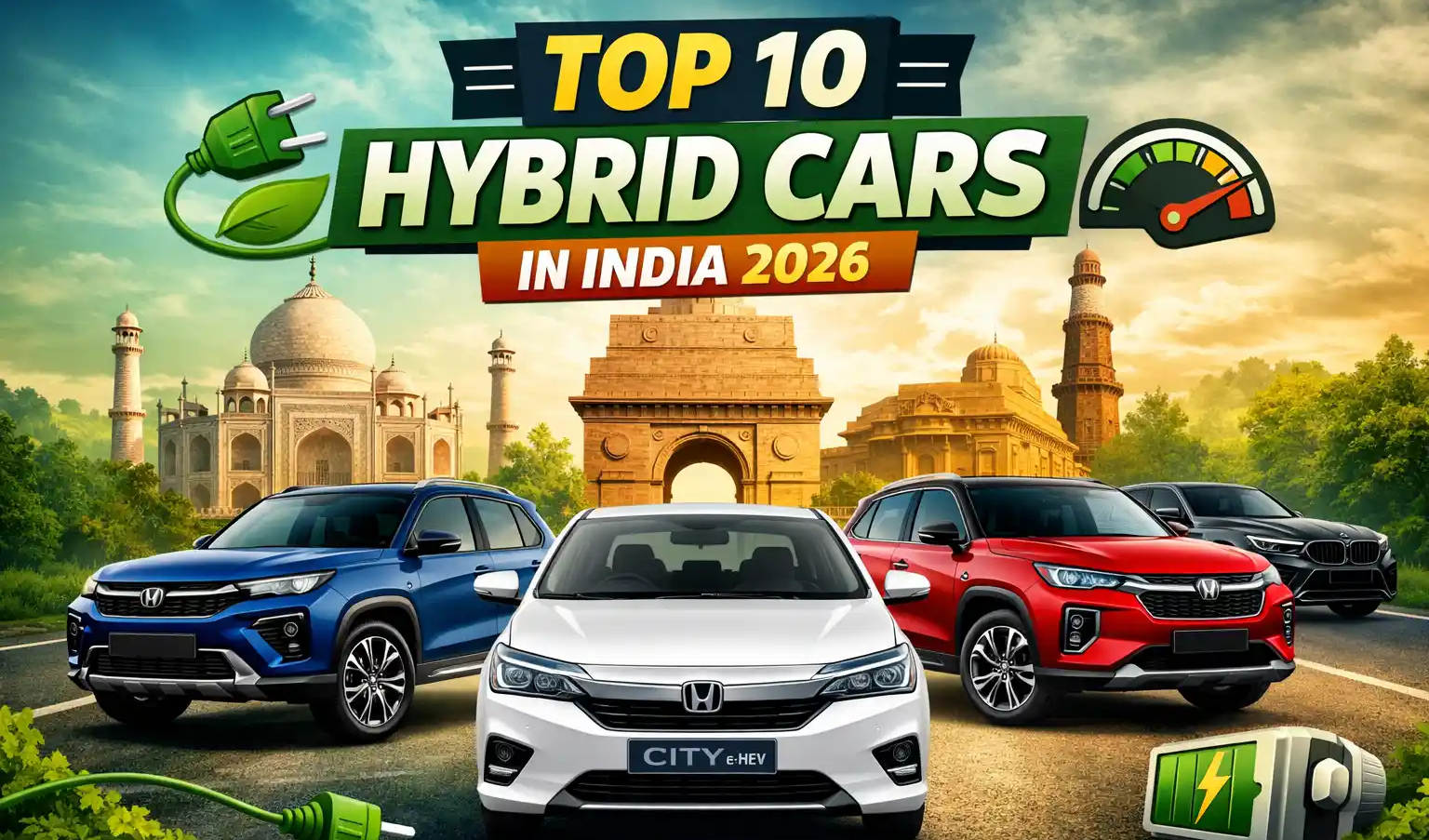
    Top 10 Hybrid Cars in India (2026) – Best Fuel Efficient Hybrid Vehicles

    Hybrid cars are quickly gaining popularity in India as buyers look for vehicles that offer better fuel efficiency without fully switching to electric cars. A hybrid car uses both a petrol engine and an electric motor to power the vehicle. This combination helps reduce fuel consumption, improve mileage, and lower emissions. Unlike fully electric vehicles, hybrid cars do not require external charging because their batteries recharge automatically while driving. This makes them a practical choice for Indian buyers who want improved efficiency but still prefer the convenience of petrol vehicles. In this article, we will explore the top 10 hybrid cars available in India in 2026, including their price range, mileage, performance, and features. What is a Hybrid Car? A hybrid car combines two power sources: a conventional petrol engine and an electric motor powered by a battery pack. The system automatically decides when to use the petrol engine, electric motor, or both together depending on driving conditions. For example, during slow city driving the car may run mostly on electric power, while on highways the petrol engine takes over. This intelligent combination improves fuel efficiency and reduces pollution. Advantages of Hybrid Cars Better fuel efficiency compared to normal petrol cars Lower emissions and more eco-friendly No need for external charging infrastructure Smoother and quieter driving experience Lower fuel costs for long-term ownership Top 10 Hybrid Cars in India 1. Toyota Urban Cruiser Hyryder Hybrid The Toyota Urban Cruiser Hyryder is one of the most popular hybrid SUVs available in India. It features Toyota’s strong hybrid system which allows the vehicle to run on electric power for short distances in city traffic. This SUV offers impressive mileage for its segment along with a premium interior and modern features. It is designed for buyers who want a practical family SUV with excellent fuel efficiency. Key Specifications Engine: 1.5L Petrol + Electric Motor Power: Around 115 PS combined output Mileage: Up to 27 km/l Transmission: e-CVT automatic Price: ₹16 – ₹20 lakh (approx) 2. Maruti Suzuki Grand Vitara Hybrid The Maruti Suzuki Grand Vitara shares its hybrid technology with the Toyota Hyryder. It is one of the most fuel-efficient SUVs currently available in the Indian market. The Grand Vitara offers a premium cabin, a panoramic sunroof, modern infotainment system, and strong hybrid performance that makes it perfect for long drives as well as city commuting. Engine: 1.5L Petrol Hybrid Mileage: Around 27 km/l Power: Approx 115 PS Transmission: e-CVT Price: ₹16 – ₹19.5 lakh 3. Honda City e:HEV Hybrid Honda introduced the City e:HEV to bring advanced hybrid technology into the sedan segment in India. The car uses a dual electric motor system which provides smooth and responsive performance. The sedan is also equipped with Honda Sensing ADAS features that enhance safety and driving convenience. Engine: 1.5L Petrol + Dual Motor Hybrid Mileage: Around 26 km/l Transmission: e-CVT Price: ₹19 – ₹20 lakh 4. Toyota Innova Hycross Hybrid The Innova Hycross Hybrid is a premium MPV designed for families who want comfort, space, and efficiency. It uses a powerful 2.0-liter petrol hybrid engine which delivers both performance and excellent fuel economy for a large vehicle. Engine: 2.0L Petrol Hybrid Mileage: Around 23 km/l Seating: 7 or 8 passengers Price: ₹25 – ₹30 lakh 5. Maruti Suzuki Invicto The Maruti Suzuki Invicto is essentially Maruti’s premium MPV based on the Innova Hycross platform. It offers the same hybrid powertrain but with Maruti’s Nexa dealership support and slightly different styling. Engine: 2.0L Petrol Hybrid Mileage: Around 23 km/l Transmission: e-CVT Price: ₹28 – ₹30 lakh 6. Toyota Camry Hybrid The Toyota Camry Hybrid is one of the most refined luxury hybrid sedans in India. It is known for its smooth ride, silent cabin, and excellent long-distance comfort. Engine: 2.5L Petrol Hybrid Mileage: Around 23 km/l Power: Approx 218 PS Price: ₹46 – ₹47 lakh 7. Lexus ES 300h The Lexus ES 300h is a luxury hybrid sedan that focuses on comfort and advanced technology. It offers exceptional ride quality and a premium interior experience. Engine: 2.5L Hybrid System Mileage: Around 22 km/l Luxury interior with premium materials Price: Around ₹65 lakh 8. Lexus NX 350h The Lexus NX 350h is a luxury hybrid SUV designed for buyers who want performance along with efficiency. It features modern styling and a powerful hybrid drivetrain. Engine: 2.5L Petrol Hybrid Power: Around 240 PS Price: ₹70 lakh (approx) 9. BMW XM (Plug-in Hybrid) The BMW XM is a high-performance plug-in hybrid SUV that combines a powerful V8 petrol engine with electric motors. It represents the future of performance-oriented hybrid technology. Engine: 4.4L V8 Plug-in Hybrid Power: Over 650 PS Price: ₹2.5 crore 10. Mercedes-Benz C-Class Hybrid Mercedes-Benz has introduced hybrid technology in many of its models including the C-Class. The hybrid system improves efficiency while maintaining the luxury and performance expected from a premium sedan. Engine: Petrol Hybrid System Luxury interior and advanced technology Price: Around ₹58 lakh Comparison Table of Popular Hybrid Cars Car Engine Mileage Price Range Toyota Hyryder 1.5L Hybrid 27 km/l ₹16 – ₹20 lakh Grand Vitara 1.5L Hybrid 27 km/l ₹16 – ₹19.5 lakh Honda City Hybrid 1.5L Hybrid 26 km/l ₹19 – ₹20 lakh Innova Hycross 2.0L Hybrid 23 km/l ₹25 – ₹30 lakh Future of Hybrid Cars in India Hybrid vehicles are expected to play a major role in the Indian automobile industry over the next decade. While electric cars are gaining attention, hybrid cars offer a balanced solution by improving efficiency without requiring charging infrastructure. Automobile manufacturers are investing heavily in hybrid technology because it helps reduce emissions while still offering long driving range and reliability. Conclusion Hybrid cars are becoming an important part of the transition toward cleaner mobility in India. They provide better fuel efficiency, lower emissions, and a smooth driving experience without the need for external charging. Models like the Toyota Hyryder, Grand Vitara, Honda City Hybrid, and Innova Hycross have already proven that hybrid technology can work very well in Indian driving conditions. As fuel prices continue to rise and environmental awareness grows, hybrid cars are likely to become even more popular among Indian car buyers. Frequently Asked Questions (FAQs) Are hybrid cars better than petrol cars? Yes, hybrid cars generally offer better fuel efficiency and lower emissions compared to regular petrol vehicles. Do hybrid cars need charging? Most hybrid cars available in India are self-charging hybrids and do not require external charging. Which is the most affordable hybrid car in India? Currently, the Toyota Hyryder and Maruti Grand Vitara strong hybrid variants are among the most affordable hybrid vehicles in India. Are hybrid cars good for long drives? Yes, hybrid cars are excellent for long drives because they offer better mileage and smooth performance.

    0 798 0

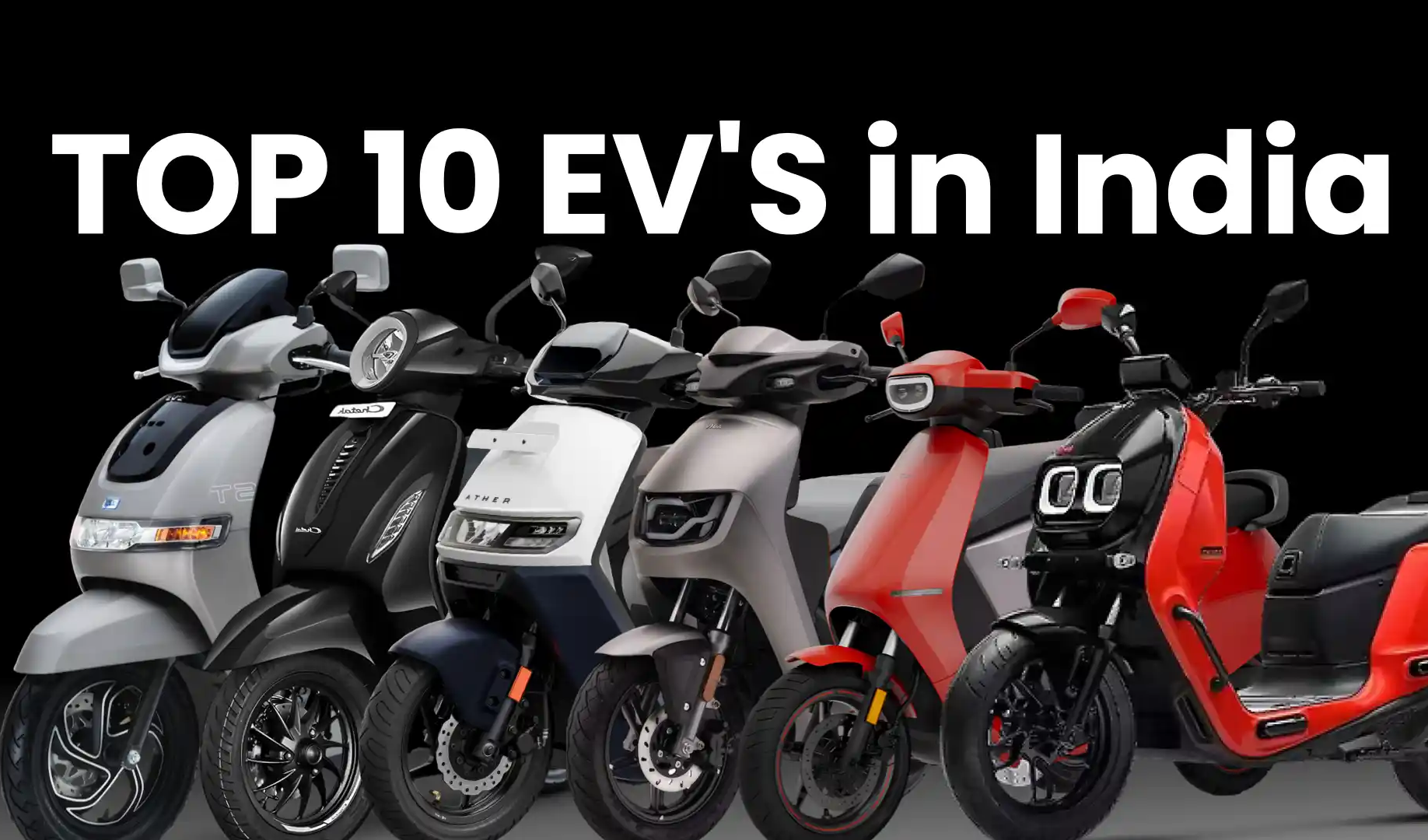
    Top 10 Electric Scooters in India

    Electric scooters are rapidly transforming the Indian two-wheeler market. Rising petrol prices, improved EV technology, and government incentives have made electric scooters a practical option for daily commuting. Modern electric scooters now offer long battery range, smart connectivity features, fast acceleration, and very low running costs. If you are planning to buy an electric scooter in 2026, this guide will help you understand the best options available in India. In this article, we will explore the top 10 electric scooters in India along with their price, range, performance, battery capacity, and features. Why the Demand for Electric Scooters Is Increasing in India Very low running cost compared to petrol scooters Eco-friendly transportation with zero tailpipe emissions Government subsidies under EV policies Smart features like navigation, mobile connectivity and digital dashboards Lower maintenance cost compared to petrol vehicles For city commuters who travel 20–40 km daily, electric scooters can significantly reduce fuel expenses while providing smooth and silent rides. Top 10 Electric Scooters in India (2026) 1. Ola S1 Pro The Ola S1 Pro is one of the most advanced electric scooters in India. It offers powerful performance, long range, and a large touchscreen dashboard with connected features. The scooter is designed for riders who want both performance and technology in their EV. Price: ₹1.30 – ₹1.50 Lakh Range: Up to 242 km Top Speed: 120 km/h Battery: 4 kWh lithium-ion battery Charging Time: Around 6 hours Pros Excellent range Fast acceleration Large touchscreen display Cons Service network still expanding 2. Simple One Simple One is known for offering one of the longest ranges among electric scooters available in India. With strong acceleration and high battery capacity, it is suitable for riders who want extended riding range. Price: ₹1.45 – ₹1.78 Lakh Range: Up to 248 km Top Speed: 105 km/h Battery: 5 kWh battery pack Pros One of the highest ranges in India Good performance Cons Limited service availability 3. Ather 450X The Ather 450X is a premium electric scooter that focuses on build quality, software experience and smooth riding dynamics. It also supports fast charging through the Ather Grid charging network. Price: ₹1.49 – ₹1.79 Lakh Range: Up to 161 km Top Speed: 90 km/h Battery: 3.7 kWh Pros Excellent build quality Premium ride experience Fast charging network Cons Higher price 4. TVS iQube ST TVS iQube is one of the most practical electric scooters in India. Backed by TVS's strong service network, it is a reliable choice for family users and daily commuters. Price: ₹1.20 – ₹1.60 Lakh Range: Up to 212 km Top Speed: 82 km/h Battery: 5.1 kWh Pros Reliable brand support Comfortable ride Cons Lower top speed compared to rivals 5. Bajaj Chetak Electric Bajaj Chetak electric scooter combines retro design with modern EV technology. The scooter features a strong metal body and premium finish. Price: ₹1.00 – ₹1.40 Lakh Range: Up to 153 km Top Speed: 73 km/h 6. Hero Vida V1 Pro Price: ₹1.25 – ₹1.50 Lakh Range: Up to 165 km Top Speed: 90 km/h Battery: Removable battery system The Vida V1 Pro offers removable batteries, making charging easier for users who live in apartments. 7. River Indie River Indie is designed as a practical electric scooter with large storage capacity and a strong build suitable for daily commuting. Price: ₹1.46 Lakh Range: Around 163 km Top Speed: 90 km/h 8. Ola S1 X Price: ₹80,000 – ₹1.10 Lakh Range: Up to 176 km Top Speed: 90 km/h Ola S1 X is a more affordable electric scooter designed for budget-conscious buyers. 9. Ather Rizta Ather Rizta is a family-focused electric scooter with a comfortable seat, large storage space and smooth riding experience. Price: ₹1.30 – ₹1.60 Lakh Range: Around 160 km Top Speed: 80 km/h 10. Ampere Magnus EX Price: Around ₹85,000 Range: 80 – 112 km Top Speed: 50 km/h Ampere Magnus EX is an affordable electric scooter suitable for daily city commuting. Electric Scooter Comparison Table Scooter Range Top Speed Price Ola S1 Pro 242 km 120 km/h ₹1.3 – 1.5 Lakh Simple One 248 km 105 km/h ₹1.45 – 1.78 Lakh Ather 450X 161 km 90 km/h ₹1.49 – 1.79 Lakh TVS iQube 212 km 82 km/h ₹1.2 – 1.6 Lakh Bajaj Chetak 153 km 73 km/h ₹1.0 – 1.4 Lakh Running Cost of Electric Scooters The running cost of an electric scooter is extremely low compared to petrol scooters. Charging an electric scooter generally costs ₹15–₹30 for a full charge, which can provide around 100–150 km of riding range. This means the cost per kilometer can be less than ₹0.25, while petrol scooters usually cost around ₹2–₹3 per km. Conclusion Electric scooters are quickly becoming the future of urban mobility in India. With improved battery technology, better range and smart features, EV scooters are now a practical choice for daily commuting. Whether you want performance, long range, or affordability, the Indian EV market now offers multiple options to choose from. Frequently Asked Questions (FAQs) Which electric scooter gives the highest range in India? Simple One currently offers one of the highest ranges among electric scooters available in India. Which is the best electric scooter for daily commuting? TVS iQube, Ather 450X and Ola S1 Pro are good options for daily commuting due to their range and features. Are electric scooters good for long distance rides? Modern electric scooters with ranges above 150 km can handle longer rides, but charging infrastructure should be considered.

    0 913 0

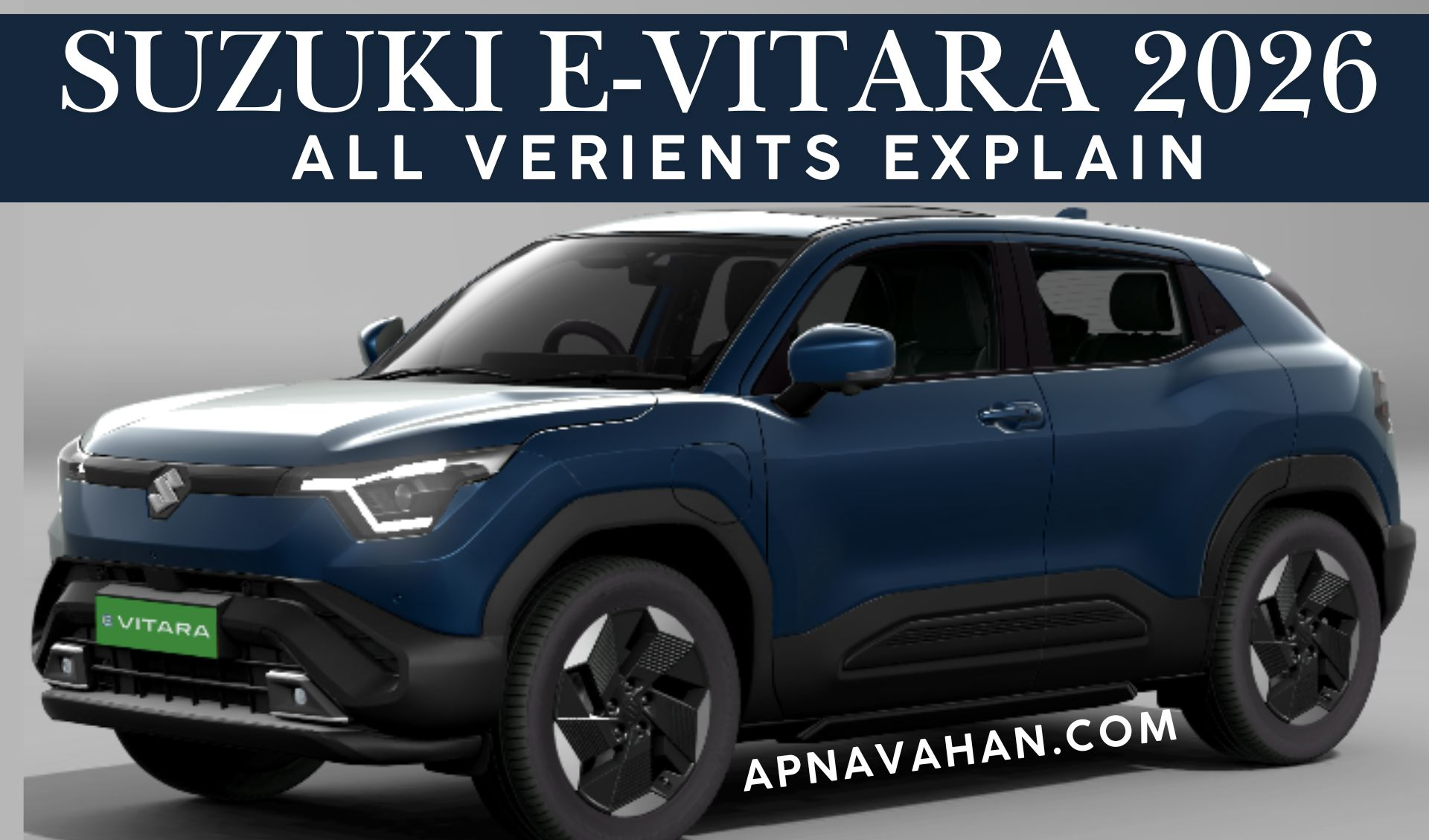
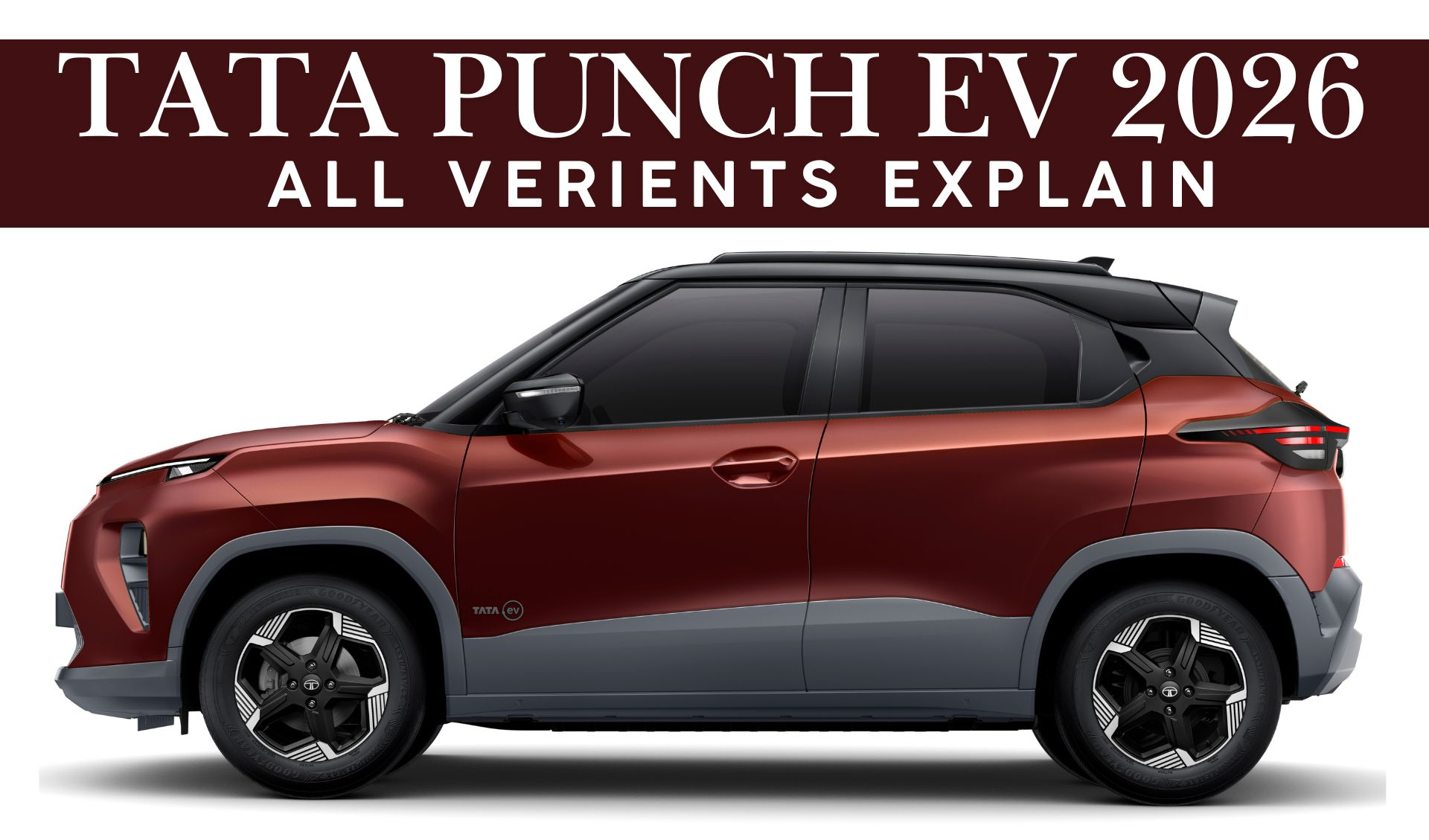
    Maruti Suzuki e Vitara vs Tata Punch EV: Which Electric SUV is Better in 2026?

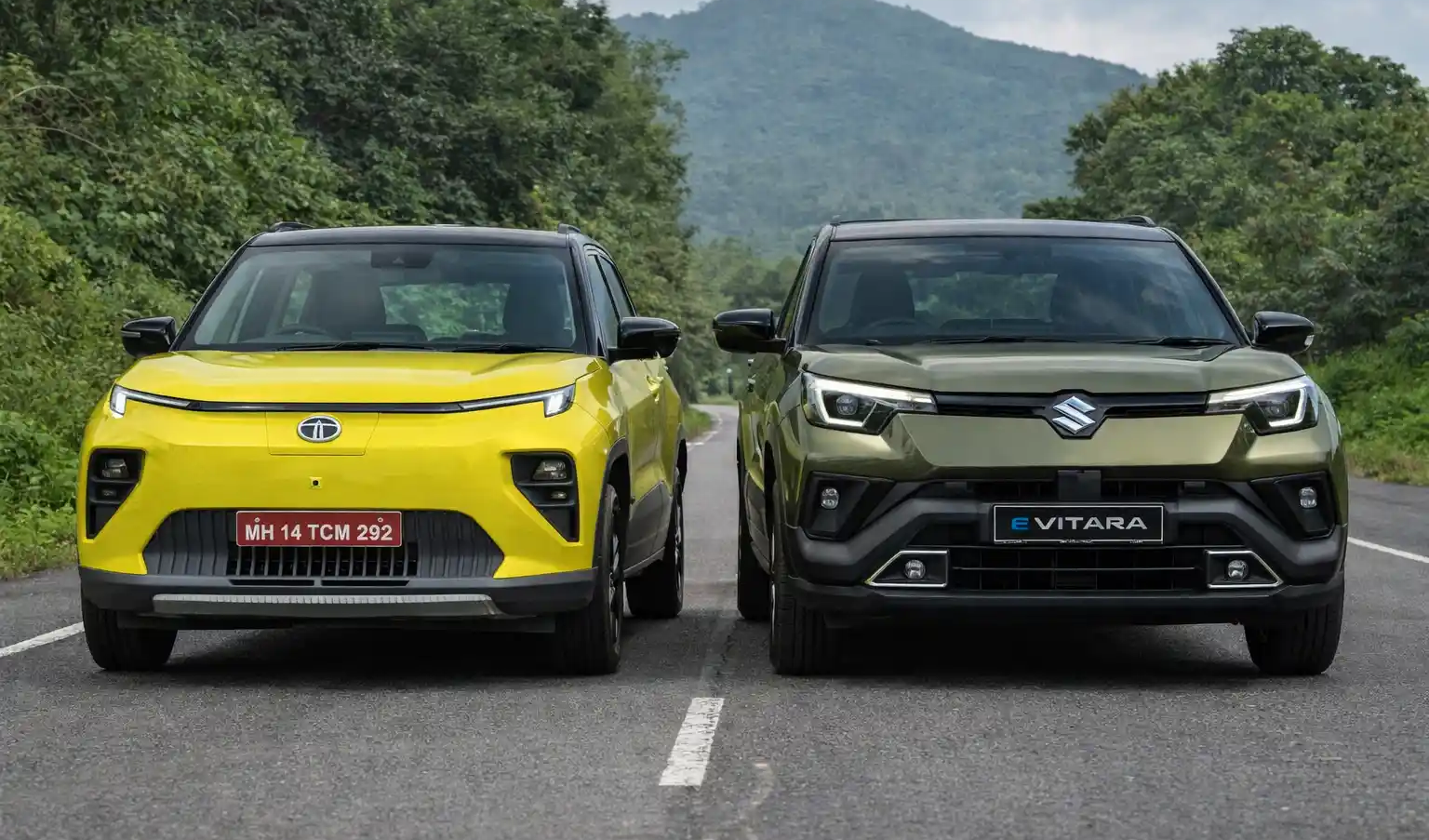
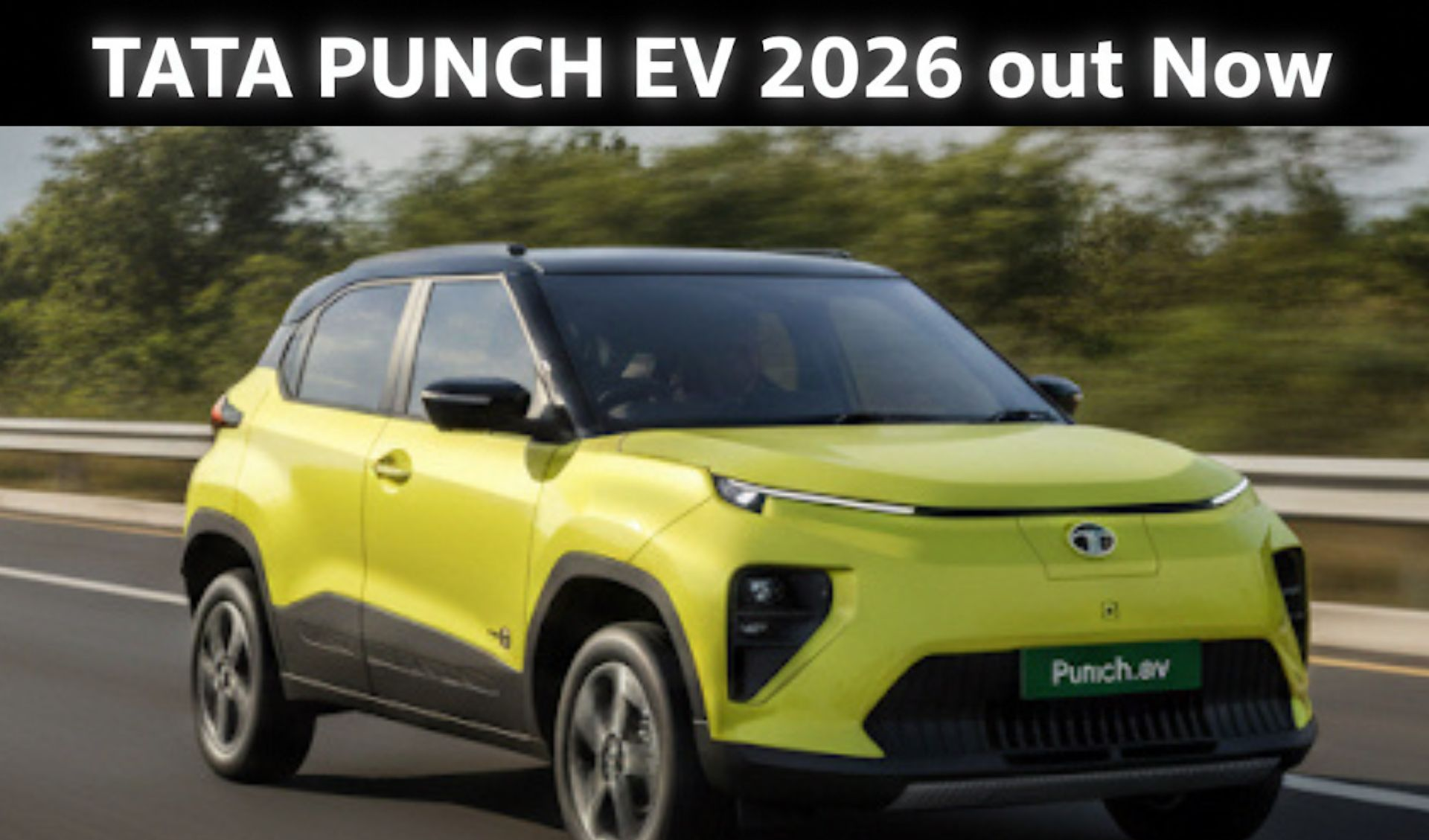
    The electric vehicle revolution in India is accelerating rapidly, and automakers are launching new EVs across different segments. Two electric SUVs that have attracted major attention are the Maruti Suzuki e Vitara and the Tata Punch EV. While both vehicles represent the shift toward sustainable mobility, they target different types of buyers and segments. In this detailed comparison, we will explore design, battery technology, range, performance, features, safety, and value for money. By the end of this guide, you will clearly understand which EV suits your needs better. Overview of Both Electric SUVs The Maruti Suzuki e Vitara is the brand’s first fully electric SUV developed under the futuristic “Crafted Futurism” design philosophy. It sits in the mid-size SUV segment and is built on the advanced HEARTECT-e electric platform. On the other hand, the Tata Punch EV is designed as a compact electric SUV based on Tata’s acti.ev architecture. It focuses on urban practicality, affordability, and everyday usability. Although both vehicles are electric SUVs, they differ significantly in size, price, battery capacity, and technology. Key Specifications Comparison Specification Maruti Suzuki e Vitara Tata Punch EV Segment Mid Size Electric SUV Compact Electric SUV Battery Capacity 49 kWh / 61 kWh 30 kWh / 40 kWh Claimed Range Up to 543 km Up to 468 km Motor Power Up to 128 kW Up to 95 kW Torque 193 Nm 154 Nm Wheelbase 2700 mm 2445 mm Boot Space Large SUV segment 366 Litres Airbags 7 Airbags 6 Airbags Design and Road Presence Maruti Suzuki e Vitara The e Vitara adopts a futuristic design language with a polyhedral muscular stance and sculpted body lines. The SUV features LED projector headlamps, signature 3-point LED DRLs, and 18-inch aerodynamic alloy wheels. The large proportions, long wheelbase, and bold front fascia give the vehicle a strong road presence. It clearly targets buyers who want a premium electric SUV with a modern aesthetic. Tata Punch EV The Punch EV follows Tata’s modern design theme with LED lighting, a digital light signature tail lamp, and SUV-inspired styling. Despite its compact size, it offers an upright stance and rugged styling cues. With 195 mm ground clearance and short overhangs, the Punch EV is designed for city driving and occasional rough roads. Battery, Range and Charging Battery technology is the most critical part of an electric vehicle. Both SUVs use lithium-ion battery packs but differ significantly in capacity. e Vitara Battery and Range 49 kWh and 61 kWh battery options Maximum claimed range up to 543 km DC fast charging: 10% – 80% in about 45 minutes AC home charging: roughly 6.5 to 9 hours The larger battery pack allows the e Vitara to deliver long-distance capability, making it more suitable for highway travel. Punch EV Battery and Range 30 kWh and 40 kWh battery options Certified range up to 468 km DC fast charging: around 26 minutes (20–80%) The Punch EV focuses more on urban commuting and shorter trips, where fast top-up charging is highly useful. Performance and Driving Experience Electric vehicles deliver instant torque, making them feel quick in city driving. e Vitara Performance Up to 128 kW electric motor 193 Nm torque Eco, Normal and Sport drive modes Snow mode for slippery conditions The multi-link rear suspension and long wheelbase enhance ride comfort and stability at higher speeds. Punch EV Performance Motor power up to 95 kW 154 Nm torque Eco, City and Sport modes Paddle shifters for regenerative braking The Punch EV is tuned for easy city driving and quick acceleration in urban conditions. Interior and Technology e Vitara Cabin Features Large dual digital display setup Wireless smartphone connectivity Premium Infinity sound system Ventilated front seats 10-way power adjustable driver seat Panoramic style sunroof The interior feels more premium and spacious due to the flat floor EV architecture. Punch EV Interior Features 26 cm digital cockpit Harman infotainment system Voice assistants including Alexa Wireless Apple CarPlay and Android Auto 360-degree camera Air purifier and ventilated seats The Punch EV offers impressive technology considering its compact segment. Safety Features Both vehicles offer advanced safety features, but the e Vitara goes a step further. e Vitara Safety ADAS Level 2 driver assistance 7 airbags including knee airbag 360-degree camera Lane keep assist Adaptive cruise control Rear cross traffic alert Punch EV Safety 6 airbags Electronic Stability Program Hill ascent and descent control Blind spot view monitor ISOFIX child seat anchors Space and Practicality The difference in vehicle size becomes obvious inside the cabin. The e Vitara offers a longer wheelbase and more spacious rear seats, making it ideal for family trips and long drives. The Punch EV, however, provides practical space for small families and daily commuting. Charging Ecosystem Charging infrastructure is crucial for EV buyers. Maruti Suzuki is building a nationwide charging network integrated with its “e for me” ecosystem and partner charging stations. Meanwhile, Tata Motors already has a large EV charging network across India, which is one of the reasons for its strong EV adoption. Price Comparison: Maruti Suzuki e Vitara vs Tata Punch EV Pricing is one of the most important factors when buyers compare electric vehicles. The Maruti Suzuki e Vitara is positioned as a premium mid-size electric SUV, while the Tata Punch EV targets the compact and affordable EV segment. Maruti Suzuki e Vitara Price (Ex-Showroom) Variant Battery Pack Price (Ex-Showroom) Delta 49 kWh ₹15.99 Lakh Zeta 61 kWh ₹17.49 Lakh Alpha 61 kWh ₹19.79 Lakh Alpha Dual Tone 61 kWh ₹20.01 Lakh Maruti Suzuki also offers a Battery-as-a-Service (BaaS) option for the e Vitara. With this plan, the car price starts around ₹10.99 lakh and customers pay a battery usage fee per kilometre. Tata Punch EV Price (Ex-Showroom) Variant Battery Pack Price (Ex-Showroom) Smart 25 kWh ₹10.99 Lakh Smart+ 25 kWh ₹11.49 Lakh Adventure 25 kWh ₹11.99 Lakh Adventure Long Range 35 kWh ₹12.99 Lakh Empowered 35 kWh ₹13.99 Lakh Empowered+ 35 kWh ₹14.49 Lakh Quick Price Difference Electric SUV Starting Price Top Variant Price Maruti Suzuki e Vitara ₹15.99 Lakh ₹20.01 Lakh Tata Punch EV ₹10.99 Lakh ₹14.49 Lakh From a pricing perspective, the Tata Punch EV is significantly more affordable, making it suitable for budget EV buyers. Meanwhile, the Maruti Suzuki e Vitara costs more but offers a larger battery pack, longer driving range, and premium SUV features. Which Electric SUV Should You Buy? The answer depends on your budget and usage pattern. Choose the e Vitara if: You want a larger electric SUV You frequently drive long distances You want premium features and ADAS technology Choose the Punch EV if: You want an affordable electric SUV Your driving is mostly in the city You prefer a compact and easy-to-drive vehicle Final Verdict The e Vitara and Punch EV represent two different approaches to electric mobility in India. The e Vitara focuses on premium technology, long range, and SUV comfort, while the Punch EV emphasizes accessibility, urban practicality, and value for money. If you want a premium electric SUV for long journeys, the e Vitara is the better option. However, if your priority is an affordable EV for daily city use, the Punch EV remains one of the most practical electric SUVs available today. Frequently Asked Questions (FAQs) 1. Which EV has more range? The e Vitara offers a maximum range of around 543 km, while the Punch EV offers up to 468 km. 2. Which car is bigger? The e Vitara is significantly larger with a 2700 mm wheelbase compared to the Punch EV’s 2445 mm wheelbase. 3. Which EV is better for city driving? The Punch EV is better suited for city driving due to its compact size and easy maneuverability. 4. Does the e Vitara have ADAS? Yes, the e Vitara offers Level 2 ADAS features including adaptive cruise control and lane keep assist. 5. Which EV is more affordable? The Punch EV is expected to be more affordable than the e Vitara because it belongs to the compact EV segment.


    0 675 0

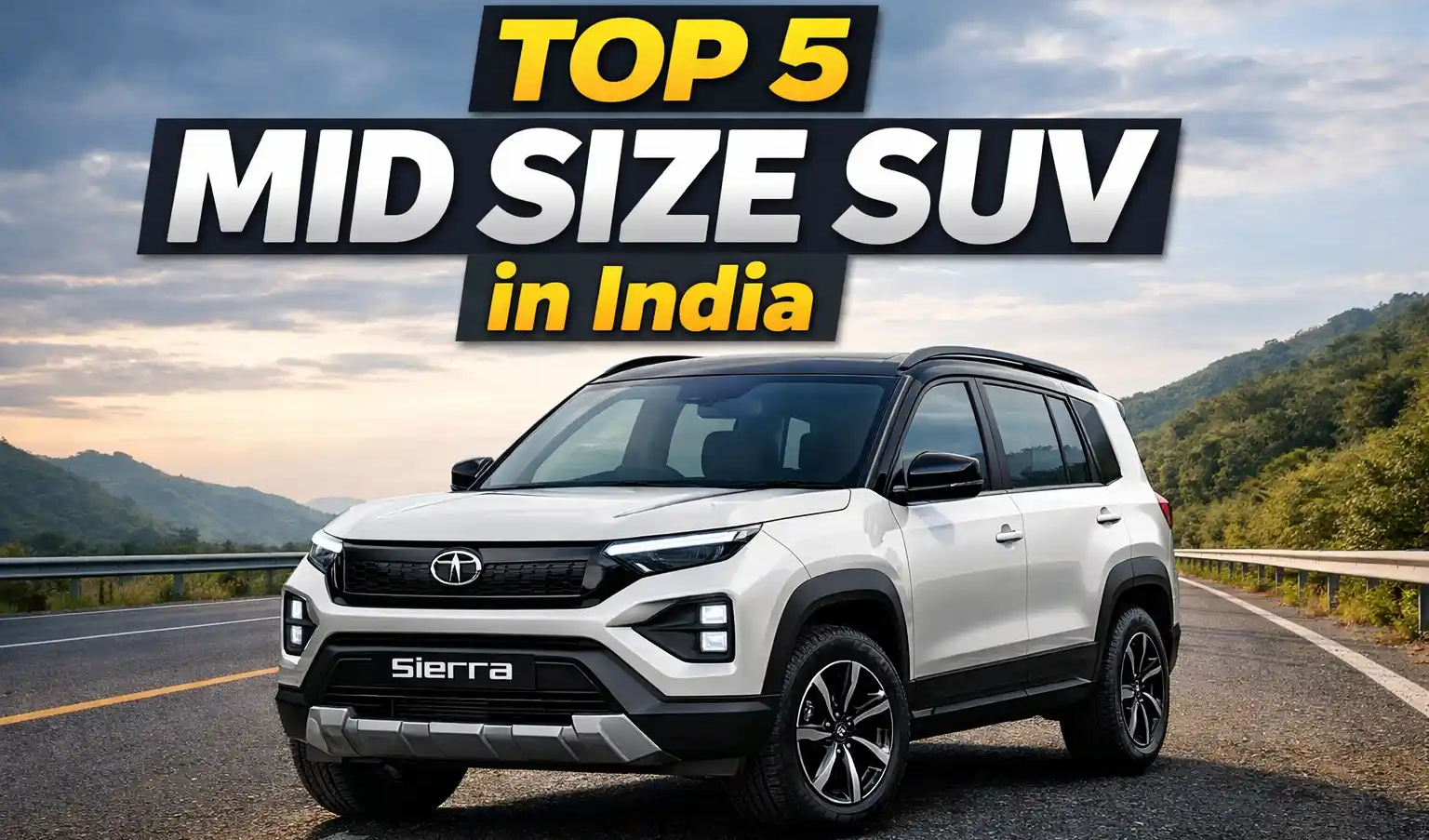
    Top 5 Mid Size SUVs in India – Complete Analysis with Price, Engine, Mileage, Performance, Pros and Cons

    The mid size SUV category has become one of the most competitive segments in the Indian car market. This category sits between compact SUVs and large three-row SUVs. Because of this positioning, buyers get the advantages of both worlds — strong road presence and practical usability for daily driving. In recent years Indian buyers have started paying attention to several important factors while buying an SUV. These include engine capability, long distance comfort, fuel efficiency, safety technology and overall ownership cost. Because of this shift in buying behaviour, car manufacturers are constantly updating their SUVs with new engines, better infotainment systems and more safety features. In this guide we analyse five important mid size SUVs that either dominate the segment or are expected to create strong competition in the near future. List of Top Mid Size SUVs in India Tata Sierra Renault Duster 2026 Hyundai Creta Maruti Suzuki Grand Vitara Kia Seltos Tata Sierra – A Modern Interpretation of a Classic SUV Tata Motors is planning to reintroduce the Sierra nameplate in the Indian market. The original Sierra from the 1990s was considered a bold design at that time. The upcoming model is expected to reinterpret that identity using a modern platform and contemporary styling elements. Expected Price ₹15 lakh to ₹25 lakh (estimated ex showroom) Engine and Driving Character Industry reports suggest that the new Sierra may use a turbocharged petrol engine. A turbocharged unit helps deliver better pulling power during acceleration while maintaining acceptable fuel efficiency. 1.5 litre turbo petrol engine Estimated power output close to 170 PS Expected torque around 280 Nm Estimated Mileage Fuel efficiency figures are likely to remain within the range of 16 to 18 kilometres per litre depending on driving conditions. Strengths Distinctive design compared with other SUVs Expected strong safety engineering Potentially powerful turbo engine Weak Points Not yet available in the market Real-world reliability unknown Renault Duster 2026 – Return of a Tough SUV The Duster once built a strong reputation in India because of its durable mechanical setup and impressive suspension capability. The upcoming generation aims to modernise that formula while keeping the SUV's rugged personality intact. Expected Price ₹12 lakh to ₹20 lakh Engine and Performance A turbo petrol engine is expected to power the upcoming model. Turbocharged engines generally provide better mid range torque, which is especially useful for highway driving. 1.3 litre turbo petrol engine Power output close to 150 PS Torque approximately 250 Nm Fuel Efficiency Estimated mileage figures may fall between 16 and 18 kilometres per litre. Advantages Strong suspension setup Comfortable ride over uneven roads Practical SUV design Limitations Interior luxury may not match some competitors Smaller dealership network compared with major brands Hyundai Creta – Segment Benchmark for Features The Creta has played a major role in shaping the mid size SUV segment in India. Many buyers consider it a benchmark because it combines multiple engine choices, technology features and a comfortable cabin. Price Range ₹11 lakh to ₹20 lakh Engine Options 1.5 litre petrol engine 1.5 litre turbo petrol engine 1.5 litre diesel engine Power Output Petrol: about 115 PS Turbo petrol: about 160 PS Diesel: about 116 PS Mileage Petrol versions: around 16–17 km/l Diesel versions: around 19–21 km/l Pros Wide engine lineup Feature rich interior Comfortable daily driving experience Cons Higher trims become expensive Design preference can vary among buyers Maruti Suzuki Grand Vitara – Focus on Efficiency and Hybrid Technology The Grand Vitara differentiates itself by offering hybrid technology. Hybrid systems combine a petrol engine with an electric motor to improve fuel efficiency especially in city driving conditions. Price ₹11 lakh to ₹20.5 lakh Engine Options 1.5 litre mild hybrid petrol 1.5 litre strong hybrid petrol Power Output Mild hybrid: about 103 PS Strong hybrid: about 115 PS Mileage Mild hybrid: about 20 km/l Strong hybrid: around 27 km/l Pros Excellent fuel economy Smooth hybrid driving behaviour Wide service network Cons Not designed for aggressive driving Performance enthusiasts may want more power Kia Seltos – Sporty Styling with Strong Feature Package The Seltos has gained popularity because of its modern styling and technology focused cabin layout. Many younger buyers prefer this SUV because it offers a balance between sporty performance and digital features. Price Range ₹11 lakh to ₹21 lakh Engine Options 1.5 litre petrol 1.5 litre turbo petrol 1.5 litre diesel Power Standard petrol: about 115 PS Turbo petrol: about 160 PS Diesel: about 116 PS Mileage Petrol: roughly 17 km/l Diesel: close to 20 km/l Pros Modern exterior design Powerful turbo engine option Advanced technology features Cons Higher variants increase price significantly Suspension can feel firm on rough roads Comparison Table SUV Engine Power Mileage Price Tata Sierra 1.5 Turbo Petrol ~170 PS 16-18 km/l ₹15-25 Lakh Renault Duster 1.3 Turbo Petrol ~150 PS 16-18 km/l ₹12-20 Lakh Hyundai Creta Petrol / Diesel 115-160 PS 16-21 km/l ₹11-20 Lakh Grand Vitara Hybrid Petrol 103-115 PS 20-27 km/l ₹11-20.5 Lakh Kia Seltos Petrol / Diesel 115-160 PS 17-20 km/l ₹11-21 Lakh Conclusion Choosing a mid size SUV depends heavily on what the buyer prioritizes. Some drivers focus on performance, while others want fuel efficiency or advanced technology. Vehicles like Creta and Seltos attract buyers looking for modern features. Grand Vitara appeals to customers who value lower running costs. Meanwhile, the upcoming Sierra and Duster could introduce fresh competition into the segment once they officially launch. FAQs Which mid size SUV offers the best mileage? The hybrid version of the Grand Vitara delivers the highest efficiency. Which SUV offers the most power? The turbo petrol engines available in Creta and Seltos produce the highest power in this segment. Is Tata Sierra launching in India? The model is expected to launch with a new design and modern technology.
    0 634 0