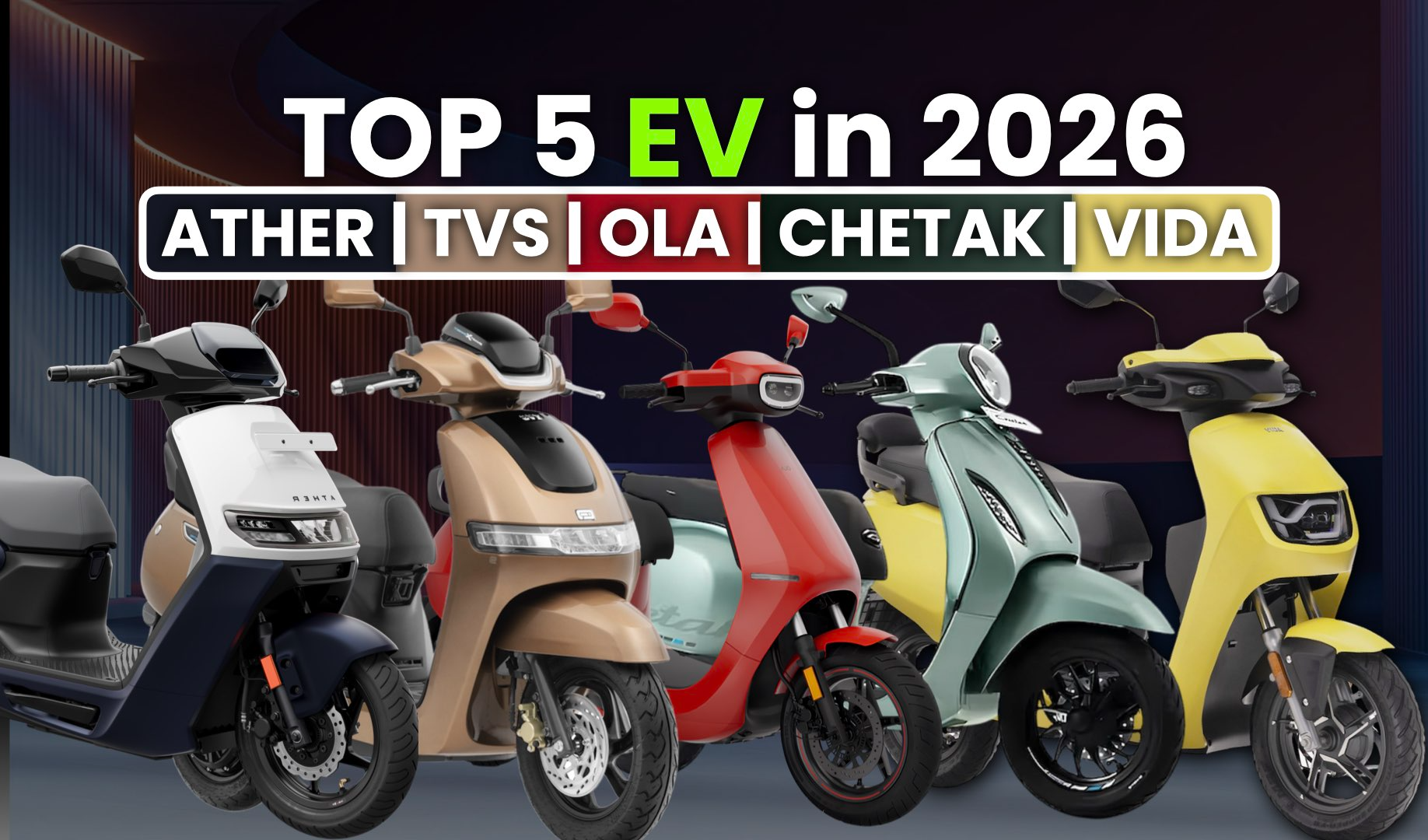
Electric vehicles are no longer just an experiment in India. They are now a serious alternative to petrol vehicles, especially in the two-wheeler segment. But as the EV market grows, one major confusion also grows with it — which EV brand should you trust?
Every brand claims to be the best. Some talk about range, some highlight performance, others push technology or pricing. But no EV brand is perfect at everything. Each one has specific strengths and clear weaknesses.
This blog is written to help buyers understand EV brands the right way, not through marketing promises, but through real ownership logic. Using the five evaluation points explained in the video, let’s break down five major EV brands and understand exactly who is best at what.
The 5 Key Factors Used to Judge EV Brands
Before comparing brands, it’s important to understand the framework. According to the video, EV brands should be judged on five practical ownership pillars, not just price or claimed range.
-
Battery quality and long-term reliability
-
Charging convenience and ecosystem
-
Software, technology, and smart features
-
Service network and after-sales support
-
Brand vision, transparency, and trust
Using these same five pillars, let’s analyze each brand honestly.
1. Ather Energy – Technology Leader, But Not for Everyone
Where Ather Excels
Ather is clearly the most technology-focused EV brand in the Indian market. From the moment you ride an Ather scooter, you can feel that software and engineering are at the center of the product.
Ather’s strengths include:
Stable and smooth software experience
Accurate range estimation
High-quality displays and dashboards
Strong mobile app integration
Regular software updates that actually improve usability
The video highlights that Ather scooters feel well-finished and refined, especially in terms of user interface and riding feedback. There is very little confusion or unpredictability, which is extremely important for EV buyers.
Where Ather Falls Short
The biggest drawback of Ather is pricing.
Higher upfront cost compared to competitors
Repairs and parts can be expensive
Not the best option for budget-conscious buyers
Ather ownership also makes the most sense in cities with good charging infrastructure. In smaller towns, charging convenience may feel limited.
Verdict
Best for: Technology lovers, urban riders
Not ideal for: Budget buyers, rural users
2. Ola Electric – Feature King with Execution Challenges
Where Ola Is Strong
Ola Electric is the brand that focuses on maximum features and performance.
Ola scooters offer:
Strong acceleration and high top speed
Large, feature-packed displays
Aggressive design language
Attractive pricing for the specifications
On paper, Ola scooters look unbeatable. The video clearly acknowledges that no other brand offers this level of performance and features at similar pricing.
Where Ola Struggles
However, the video also points out that Ola’s biggest weakness is inconsistent execution.
Common concerns include:
Software glitches
Quality control issues
Mixed after-sales experiences
Slow problem resolution in some cases
Ola is ambitious, but ambition sometimes runs ahead of execution.
Verdict
Best for: Performance seekers, feature lovers
Not ideal for: Buyers who want stress-free ownership
3. TVS iQube – The Safest and Most Reliable Choice
Where TVS Excels
TVS takes a conservative and mature approach to EVs — and that works in its favor.
TVS strengths include:
Excellent reliability
trong nationwide service network
Predictable performance
Good build quality
Smooth ownership experience
The video emphasizes that TVS understands Indian customers very well, especially families and daily commuters.
Where TVS Feels Weak
TVS does not focus much on excitement:
Performance is moderate
Design is simple
Features are basic compared to rivals
But this is intentional. TVS prioritizes stability over experimentation.
Verdict
Best for: Families, long-term ownership
Not ideal for: Enthusiasts and thrill-seekers
4. Bajaj (Chetak) – Strong Build and Trust, Limited Performance
Where Bajaj Excels
Bajaj focuses heavily on build quality and longevity.
Bajaj Chetak stands out for:
Solid metal body feel
Stable and comfortable ride
Proven brand trust
Simple, predictable behavior
The video explains that Bajaj does not chase flashy numbers. Instead, it builds scooters that feel dependable.
Where Bajaj Lags
Lower top speed
Conservative performance
Fewer advanced features
Chetak is not designed to impress enthusiasts — it is designed to last.
Verdict
Best for: Mature riders, daily commuters
Not ideal for: Speed lovers and tech enthusiasts
5. Hero Vida – Practical Value with an Identity Gap
Where Hero Vida Is Strong
Hero Vida focuses on accessibility and practicality.
Its strengths include:
Competitive pricing
Removable battery convenience
Decent feature balance
Strong parent brand trust
The video highlights Vida as a good option for first-time EV buyers.
Where Vida Falls Short
Brand identity is still unclear
Not a clear leader in any one area
Emotional connection is missing
Vida is improving, but still developing its personality.
Verdict
Best for: Budget buyers, first-time EV owners
Not ideal for: Buyers seeking premium feel or excitement
Clear Brand-Wise Winners by Category
| Category |
Best Brand |
| Battery Reliability |
TVS / Bajaj |
| Charging Convenience |
Ather |
| Software & Tech |
Ather |
| Performance & Features |
Ola |
| Service Network |
TVS |
| Build Quality |
Bajaj |
| Value for Money |
Hero Vida |
| Overall Balance |
TVS |
Final Thoughts – Choose the Brand That Matches Your Priority
The most important lesson from the video is this:
Do not choose an EV brand based on hype. Choose it based on your needs.
If you want technology and refinement, choose Ather
If you want raw performance and features, choose Ola
If you want peace of mind, choose TVS
If you want durability, choose Bajaj
If you want value and simplicity, choose Hero Vida
EV ownership is a long-term relationship. Understanding these five evaluation points will save buyers from regret and confusion.